Welcome to the David Victor Vector Blog

Welcome to the David Victor Vector blog. This is blog that covers religious observances around the world international affairs and global business. This blog describes religious holidays for most major religions as well as raising issues dealing with globalization, international business ethics, cross-cultural business communication and political events affecting business in an integrated world economy. I look forward your discussion and commentary on these articles and subjects. Enjoy!
Showing posts with label neo-Druid. Show all posts

Tuesday, December 22, 2020

Yule 2020

Introduction

The winter solstice – or Yule -- is celebrated on December 21.

Yule is seen as an important sabbat (religious celebration) in Wicca and Thelema. In some Neo-Pagan traditions such as the Scandinavian Asatru Folk Assembly, the holiday extends for twelve days in a period called Yuletide.  Yuletide starts on the winter solstice and ends on January 1.

Additionally, the winter solstice is celebrated in Zoroastrianism (or Parseeism) as Shab-e Yalda or (more simply) just Yalda.


Origins of Yule

The Wiccan and Neo-Pagan holidays of Yule and Yuletide should not be confused with the Christian use of these terms, as they have nothing to do with the birth of Christ. The traditions of Yule were practiced in Britain, Scandinavia and northern Germany long before the introduction of Christianity to these regions. Rather, during the conversion of these regions, the Roman Catholic Church simply co-opted the use of the terms Yule and Yuletide in these same northern European Christian traditions to make Christianity feel more familiar.

Like Yule, the Zoroastrian Yalda long predates Christianity. Yalda has been celebrated as the victory of light over dark for at least 1000 years before the birth of Christ. Zoroastrians themselves, however, place the date somewhere around 1600 BCE. There may be a connection to Christmas, though remotely so. Some scholars argue that the early Church set the date of Jesus’ birth to coincide with the ancient Roman celebration of Saturnalia (for more on this theory, please see my earlier post at


Saturnalia, in turn, arguably has its roots the mid-winter celebration of ancient Persian Empire.  The mid-winter celebration of ancient Persia, in turn, is Yalda, since the primary religion of the ancient Persian Empire was Zoroastrianism.

A Note on Neo-Paganism

The number of adherents to Neo-Pagan religions is notably difficult to estimate for several reasons. First, many nations (including the United States and France) do not conduct census data on religion. Second, because of prejudice and persecution, many adherents of Neo-Pagan religions do not openly identify as such while continuing to practice rituals. Finally, in Europe many Neo-Pagan rituals are practiced alongside Christian ones among those self-identifying as Christian. These are especially evident with Yuletide practices and the observation of the midwinter solstice, but are also present in the Midsummer Night’s bonfires of the summer solstice, Halloween practices, and Eastertime practices that take on a syncretistic overlay of Neo-Pagan Ostara practices.

That said, estimates for those self-identifying as Wiccan, Druid, Pagan, neo-Pagan, Goddess Worship, New Age or related faiths range from one to six million worldwide. The data vary greatly. For instance, in the United Kingdom, the Office for National Statistics in 2001 found only 42,262 self-identified as such while Oxford historian Ronald Hutton in 1999 estimated 250,00 practitioners (which would place the number larger than Hinduism in the UK). Based on this, for the 2011 Census the UK’s Pagan Federation encouraged pagans to self-identify as such, with the result that the number came to over 80,000. This suggests either that neo-Paganism roughly doubled in size over the preceding decade (making it the fastest growing faith in the UK) or that (as Hutton suggested) official data are grossly underreported for neo-Pagan self-identification.

In the United States, the growth in this century of Wicca and neo-Paganism is among the fastest of all faiths. The US Census Bureau Self-Identified Religious Identification Survey gathered religious information in 1990, 2001 and 2008. In 1990, only 8000 US Americans identified as Wiccan. By 2001, that number reached 274,000. In 2008 (the last year the survey took place), that number reached 702,00.


To put this in perspective, this is larger (in 2008) than such religions as Unitarians (586,000), Christian Science (339,000), or Quaker (130,000) and roughly equal to adherents of the United Church of Christ (736,000). Moreover, this is just those willing to self-identify for a US Census Bureau survey. The numbers are likely much higher for two reasons. First, prejudice against pagan faiths has historically been very high. Second, many who practice pagan rites my not solely identify as such, calling themselves "new age" or "spiritual but not religious."

The recognition of neo-Pagan practices by various nations may provide some idea of the growing recognition of their importance. For example, Wicca has since 1990 been included in the Religious Requirements and Practices of Certain Selected Groups: A Handbook for Chaplains.  Since 2007, Wicca and “earth-based relgions” have been formally recognized by the US military as an official religion, including pentacles for gravestones and the 2011 inclusion of an “outdoor worship center” at the US Air Force Academy.  In Iceland, the Ásatrúarfélagið (Asatru Fellowship) has been recognized formally since 1973 and is the second largest faith in the country.

Yule Traditions

Yule Altar

As with all sabbats, an altar is set up in honor of Yule. The Yule altar is part of virtually all Yule celebrations whether Wiccan, Neo-Pagan or Neo-Druidic.  For Wicca in particular, the Yule altar is arguably the most important observance of the holiday.

Yule altar
The Yule altar is set up facing north, the direction associated with winter in all of these traditions. In Wicca, at the center of the altar is a bowl (or cauldron). Usually, a candle is placed in the bowl to symbolize light over darkness.

The colors of the Yule season are white, red and green. As a result, the altar usually is decorated with things of these colors. These often include tablecloths of these colors as well as red fruit, pine branches, holly leaves and holly berries.

Yule altars are usually decorated with symbols of the sun in some form.  This usually involves candles, often placed in the central bowl (in Wicca) or using gold-colored candleholders.  Other common sun decorations may include pictures of the sun drawn by children, sun ornaments or gold disks and coins.

Yule Food and Drink

Mocha Yule Log
Traditional Yuletide foods often include roast poultry and game (such as venison), squash, and root vegetables. Items that include the colors of the season (red, white and green) are common, such as candy canes and fruits of those colors.

Often desserts take the form of chocolate or nut bread rolls made to look like Yule logs. One recipe for a Wiccan Yule log can be found at


Winter Solstice Wassail
Traditional drinks include cider, mulled wine and Wassail. Wassail is a mix of sherry and brandy with various juices (often citrus) and berries (sometimes left whole) blended with eggs and completed with spices such as cloves, allspice, cinnamon and nutmeg.  A recipe for Yule wassail can be found at 


Yule Traditions Shared with Christmas

Many Yule traditions are familiar within the Christmas traditions of northern Europe. These include the mistletoe, the use of evergreens (holly, ivy and pine trees), and the burning of the Yule log.

Mistletoe
Mistletoe

In Norse mythology, the god Baldur’s death and rebirth provided the explanation for winter and the apparent death of much of nature each year. As described in the Prose Edda Gylfaginning, Baldur was the god of all things fair and beautiful, and was associated with the sun. Baldur had a prophetic dream in which he predicted his own death. His mother Frigga (or Fraya) was so troubled by this that she went about asking all things on earth to vow that they would never harm Baldur. Frigga asked this vow from every object from which a weapon might be made.  She neglected, however, to ask the mistletoe, because she thought it was too insignificant to be made into a weapon.

Every god in Norse mythology was associated with a plant. The mistletoe was the plant associated with Loki, the god of mischief. Loki felt jealous of the attention given to Baldur and slighted that his plant was not considered significant enough for Frigga to ask in her quest to protect Baldur. As a result, he crafted an arrow (or dart) from the mistletoe’s wood and poisoned it with the mistletoe’s berries. 


Death of Baldur

To celebrate Baldur’s indestructibility, all of the gods assembled to throw weapons at Baldur. Because the material from which each weapon was made had vowed that they would not harm Baldur, every weapon either bounced off of Baldur or failed to hit him no matter how hard they were thrown. When it was Loki’s turn to throw his weapon, he shot his poisoned mistletoe arrow, killing Baldur. At once, the world was plunged into cold and snow, and all plant life died.

All of the gods were cast into mourning and so sent the messenger Hermod to carry a message from Frigga to plead with the death god Hel to allow Baldur to return.  Hel himself was distressed by Baldur’s death and agreed to allow Baldur to return on one condition. That one condition was that all objects and creatures weep for Baldur. All did with one exception: the giantess Thok (who, in turn, was presumed to be Loki in disguise). The result was that Baldur was allowed to return but only for part of the year, returning to the realms of Hel for the other part of each year, causing winter.

The Norse and Germanic pagans remembered this story by hanging mistletoe in the house at the midwinter solstice. By kissing under the mistletoe, they demonstrated that love and warmth (Baldur) was stronger than mischief (the mistletoe of Loki) or death – and that the rebirth of the world would come with Baldur’s return in Spring.

In neo-Pagan traditions in general and the Asaturu Folk Assembly custom in particular, this is still the reason for kissing beneath the mistletoe in the house at Yule. It should be noted that for Wicca, the mistletoe is not a associated with these traditions.

Evergreens

Linked to this same story, the plant associated with the sun god Baldur were evergreens in general and the pine tree in particular. It is from this association that the Yuletide custom of hanging evergreen wreaths amd decorating pine trees derives.

Yule wreath
In pre-Christian Viking and Germanic traditions, evergreens were used to symbolize the continued presence and eventual return of the sun since they retained their full life when all other plants were barren in the dead of winter.   The hanging of evergreen boughs on one’s doors protected those living inside.

In Druidic traditions in Britain and Ireland, the evergreens, though not associated with Baldur, were similarly hung on doors as a talisman to protect against evil spirits in wintertime.

In modern Wicca, the use of evergreens has no association with the Baldur story, regardless of its origins. This is true to of most other modern Yule traditions, although in some neo-Pagan traditions, these associations may still hold. In any case, in most Wiccan, neo-Pagan and neo-Druidic traditions for Yule, decorations of holly and ivy are still hung on doors and over hearths.
Yule trees in an English forest
For Wiccans and for most modern traditions, these decorations serve as symbols of everlasting life and the coming rebirth of the world with the growing length of days as Spring approaches. Similarly, a Yule tree is decorated for the same reason. Unlike the Christian tradition of cutting down a tree, though, many Wiccans and neo-Pagans decorate a live tree either still standing outside or set in a pot indoors which is then replanted once the ground thaws.

Yule Log

Yule log
The burning of the Yule Log is the central tradition of most Wiccan, neo-Pagan and neo-Druidic customs today. The Yule log is a short log of wood, decorated with evergreens or candles (or both).

The practice of burning a Yule Log indoors symbolizes the victory of light over dark and Spring over Winter. The Yule log is lit each year on the eve of the mid-winter solstice.

People traditionally keep a piece of charred wood from the previous year’s Yule Log throughout the year. Some do this as a talisman to protect the house and others simply as reminder of the happy celebration of Yule. Whatever the reason, it is customary to use the saved piece from the previous year’s Yule Log to start the fire for the present year’s Yule Log.

As with the mistletoe and evergreen, the burning of the Yule log has an ancient pedigree long pre-dating Christianity. The plants burned were often associated with Baldur (evergreen, pine, holly) but could also be the oak which was the tree associated with Wodin (or Odin) the god of wisdom. Those venerating other deities would use woods associated with these other gods.

It is important to emphasize here that in Wicca, there is no association of the Yule Log with the Norse gods at all but rather as a symbol of the Goddess.  Even in most modern neo-Pagan and neo-Druidic traditions (Asaturu Folk Assembly excepted), the Yule Log has less to do with worship of any particular deity than as a way to encourage the coming of longer days.

Conclusion

As with all posts, this overview is meant only to give a brief overview of some practices. Yule is celebrated in many traditions, and this is not meant to endorse or specify any one practice. If I have left out a practice from your own tradition, please share them with me.

Blessed Yule!


Want to Read Further?

Skye Alexander, “Winter Solstice or Yule,” Net Places: Wicca and Witchcraft,  http://www.netplaces.com/wicca-witchcraft/the-wheel-of-the-year/winter-solstice-or-yule.htm

Tor Age Brinsvaerd, "Norse Mythology," http://www.fornsidr.no/2011/01/norse-mythology/

H. R. Ellis Davidson, Gods and Myths of Northern Europe. Pelican Books.

Erin Frost, “Yule Traditions,” Examiner.com, http://www.examiner.com/article/yule-traditions

Ronald Hutton, The Triumph of the Moon: A History of Modern Pagan Witchcraft,  University Press, 1999. 

Andrea Kannapelli, “Celebrations: It’s Solstice, Hanukkah, Kwanzaa: Let There Be Light!” New York Times, http://www.nytimes.com/1997/12/21/nyregion/celebrations-it-s-solstice-hanukkah-kwaanza-let-there-be-light.html

Gwydion Cinhil Kirontin, “Wiccan Study: Yule History and Rituals,” http://herbalmusings.com/yule.htm

Ontario Consultants on Religious Tolerance (2016) , "Polls estimating the number of U.S. adult Wiccans in the U.S.," http://www.religioustolerance.org/estimated-number-of-wiccans-in-the-united-states-5.htm

K. M. Midgley, Legends of the Northmen. http://midgleywebpages.com/northmen.html

“Pagan Christmas Traditions,” The Pythorium, http://pythorium.com/sabbats/yule/pagan_traditions

Snorri Sturluson, Prose Edda "Death of Balder," http://www.pitt.edu/~dash/balder.html#death

Calvin Thomas, An Anthology of German Literature, D. C. Heath & Co.

Patti Wiggington, “All AboutYule,” About.com: Paganism, http://paganwiccan.about.com/od/yulethelongestnight/a/About_Yule.htm

Patti Wiggington, “History of Yule,” About.com: Paganism, http://paganwiccan.about.com/od/yulethelongestnight/p/Yule_History.htm

Patti Wiggington, “Setting Up Your Yule Altar - What to Put on a Yule Altar,” About.com: Paganism, http://paganwiccan.about.com/od/yulethelongestnight/p/YuleAltarDecs.htm

Mackenzie Wright, “How to Decorate a Wiccan Yule Altar,” Ehow.com, http://www.ehow.com/how_4578105_decorate-wiccan-yule-altar.html

Andrah Wyrdfire, “Celebrate the real reason for the season with Novices of the Old Ways,” Examiner.com, http://www.examiner.com/article/celebrate-the-real-reason-for-the-season-with-novic,"es-of-the-old-ways

US Census Bureau (2011),  Self-Described Religious Identification of Adult Population: 1990 to 2008 


“Yule,” The Pagan and Wiccan Parenting Page, http://paganparent-ivil.tripod.com/yule.html

Clip Art Sources


A recipe for Yule wassail can be found at: http://www.the-wisdom-of-wicca.com/images/wassail2.jpg


Friday, September 20, 2013

Autumn Equinox, Mabon, and Moon Festival


For 2021,  the Autumnal Equinox falls on September 21 (at least in the Northern Hemisphere).

The Autumnal Equinox is a holiday in several traditions. In Wicca, neo-Druidic and neo-Pagan traditions, it is celebrated as Mabon, Alban Elfed or Mea'n Fo'mhair.

In Japanese Buddhist tradition, it is celebrated as HiganIn Korea Chuseok (literally "Autumn's Eve") is a three-day holiday that began in 2021 on September 20 and will end September 22. In Chinese and Vietnamese Buddhist tradition, it is celebrated as the Moon Festival Zōngqiū Jié in Chinese, and Tết Trung Thu in Vietnamese. In the East Asian traditions, the holiday may be celebrated at dates varying from the actual equinox and may run for several days. In 2021, the Moon Festival actually does fall on September 21. By contrast, in 2017,  both Zōngqiū Jié, and Tết Trung Thu fell on October 4. In 2022, it will fall on September 10. In China, the holiday covers from October 1-8 in 2017. 

While this is a significant holiday for all of these faiths, it is not a day that would normally require the absence from class or work of faculty, staff or students. That said, those asking for accommodation should be allowed.

WICCAN, NEO-DRUIDIC AND NEO-PAGAN TRADITIONS
In neo-Druidic, neo-Pagan and Wiccan traditions, the Autumnal Equinox is viewed as a Major Sabbath. In all of these traditions, the holiday is celebrated as a harvest festival and as a time to recognize the balance in all things. 

A Wiccan Mabon altar
In all of these traditions, Autumn Equinox altars are set up that represent the balance of light and dark as well as the thankfulness for the harvest. Symbols of the balance of light and dark are placed on the altar (black and white objects of equal size and hanging balances). Symbols of the season on the altar typically reflect the fall colors (oranges, yellows and browns), the end of the harvest (sheaves of wheat, corn husks) and the bounty of the autumn harvest (squash, pumpkin, fall fruits). In some traditions (notably in Wicca), tools of the harvest (scythes and sickles) are also placed on the altar. 
MEA'N FO'MHAIR
Green Man of the Forest
For neo-Druids and some pagans, the Autumnal Equinox is celebrated as Mea'n Fo'mhair. In this tradition, neo-Druids gather in wooded areas and give offerings of the fall harvest (not only of berries but also of pine cones, acorns, apples and cider) to honor the Green Man of the Forest.   Such woodland harvest offerings are still practiced by neo-Druids and modern pagan (largely in England, Scotland and Ireland but with increasing practice in the US, Canada and New Zealand).

ALBAN ELFED

In other neo-Pagan traditions (and notably in the Welsh tradition), the holiday has been known for centuries as Alban Elfed or the “Light of the Sun.” In this tradition, the same sort of offerings are proferred but to “The Lady” who is also called the “Spirit of the Land.”
MABON

In Wicca and neo-Pagan traditions the Autumnal Equinox is known as Mabon. This is one of the four Major Sabbats in the eight points of the Wheel of the Year. Mabon marks the time at which day and night are in total balance, and is accompanied by personal efforts of members of these faith to find a similar balance in their lives. 


Mabon is primarily a Wiccan name for the Autumnal Equinox. Other names used by Wiccans and others include the Harvest Moon or the Harvest Home. 

Unlike the ancient names of Mea'n Fo'mhair and Alban Elfed, the Wiccan version of the holiday has been called Mabon only since the latter half of the 20th Century. Unlike many other Wiccan holidays, no corresponding name exists in ancient pagan traditions. Instead, the name was coined by the US Wiccan leader Aidan Kelley soon after the formation in 1967 of the NROOGD (New Reformed Orthodox Order of the Golden Dawn), one of the most important popularizers of the Wiccan faith.Kelley’s adoption of the name Mabon was to honor the early Welsh pagan divine son deity Mabon fab Mellt.

 CELEBRATION PRACTICES  
Both in ancient Druidic tradition and in modern neo-Druidic, pagan and Wiccan practice, offerings are often proffered in a horn of plenty called a cornucopia. As a result, Cornucopia is another name some practitioners use for the holiday. 

In Wicca, the holiday recognizes balance in all things. Mabon altars are set with symbols of balance as well the autumn harvest.

It should be noted that while the name Mabon has been growing in popularity in the UK and Ireland, many neo-Druids strongly oppose the term as a neologism. As a result, while it would be appropriate to wish a Wiccan a “Happy Mabon,” this may not be as appreciated for some neo-Druids and modern pagans.
RELATIONSHIP TO CHRISTIANITY'S MICHAELMAS

Archangel Michael trampling Satan
by Guido Reni (1636)
When Christianity first spread in the Celtic regions, the Roman Catholic Church attempted to syncretize existing pagan practices by co-opting the celebration of the Autumnal Equinox with a Christian overlay.
To this end, the Church placed great emphasis on Michaelmas which, falling on September 29, came near the same time.  In this co-opting Catholic tradition, the Archangel Michael came to represent the power of light over darkness, an important attribute as the length of daylight began to shorten. 
Today, religious services honoring the Archangel Michael are still practiced in some Roman Catholic, Episcopalian and Lutheran congregations, especially in the United Kingdom. A folk custom still in evidence in the parts of the British Isles warns that it is unlucky to harvest blackberries after Michaelmas, as they have been cursed at that time by Lucifer.This custom that it is unlucky to harvest in the woods most likely has its origin in the woodland offerings of the autumnal harvest in pre-Christian Britain described above.
EAST ASIAN BUDDHIST TRADITIONS 
In Japanese, Chinese and Vietnamese Buddhist traditions, the Autumnal Equinox is celebrated as a significant festival, centered on the moon. It is sometimes called the Moon Festival as a result.
HIGAN
Higan is the Japanese celebration of the equinoxes. Higan is celebrated at both the Autumnal Equinox and the Vernal (Spring) Equinox. On both days, the holiday is an official public holiday in Japan. Buddhists of all major sects in Japan observe Higan.

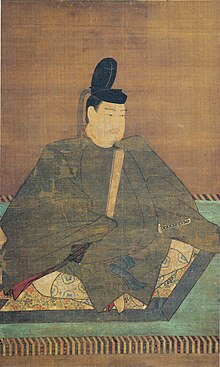
Emperor Shomu
The holiday has its origins with the institution of worship on that day by the 8th Century Japanese Emperor Shomu. The first official records of its celebration date to the year 806 CE when the government of Japan required all priests in Kokubun-ji temples to recite the Diamond Sutra at the Autumnal Equinox.
Higan in Japanese literally means "the Other Shore." The term can refer to crossing to the other shore from the material world (i.e., to Enlightenment). The term can also refer to the transitory nature of the the material world (as all things are impermanent and must die, thus crossing to the other shore).
In Japan, Higan is traditionally a day for honoring the graves of the dead. The Guide to Japanese Buddhism of the Japanese Buddhist Federation explains:


During this period, it is customary for Buddhists throughout the country to visit temples and graves. They bring flowers, incense, water or their favorite food to be to be offered to the deceased and greet them with refreshed minds to report on their well-being.

Higan is also traditionally one of the days for the beginning of pilgrimages among the country's temples by the devout.
CHINESE AND VIETNAMESE MOON FESTIVAL
The Autumnal Equinox is celebrated as the Moon Festival or Moon-Cake Festival in Chinese and Vietnamese traditons.  In both countries, the holiday is an official day off. Also in all three countries, the holiday dates back thousands of years.

Vietnamese Moon Festival Lion Dancers
In Vietnam, the holiday is called Tết Trung Thu. The holiday focuses in large part on children, and has its origins in giving parents the opportunity to be with their children after long periods out of their company during the traditional harvest time. Because of this, the holiday is often called the "Children's Holiday."

Tết Trung Thu is the second most important in the year after Tet. In China, the holiday is also given considerable importance. The holiday is particularly marked by the traditional Lion Dance with lion dancers going door to door asking to dance. These are often performed by children, although professional lion dancers are a part of main events.

Chang-E's flight to the moon
In China, the holiday is known as Zōngqiū Jié. In Chinese tradition, the holiday has its origins in the tale of the mythical Chang-E who ate her husband's dangerous elixir to save him, and flew to the moon as a consequence where she became the moon goddes. As with Vietnamese traditions, the Moon Festival is tied to the Fall Harvest.

While the origins of the Chinese Moon Festival predates historical records, the first known observances go back to at least the Zhou Dynasty (1046-256 BCE).

In many Han Chinese traditions, sacrifices are made to the moon. In many Chinese ethnic minorities, unique customs are practiced. For example, among the Dong people, there is a custom of "stealing" harvested vegetables and fruit (this is, however, only symbolically stolen as these are set out for the purpose). The Bouyei people worship the Moon Grandmother, and bring rice cakes to her shrine. The Maonan people put incense in a hanging grapefruit, to represent the moon. Finally, in some Mongolian traditions, there are practices centered on chasing the moon.
In all traditions, the festival celebrates the autumnal harvest. As the name Moon-Cake Festival suggests, it is customary to eat Moon Cakes at this time.


 Vietnamese Banh trung thu
In Vietnam, Moon Cakes are called banh trung thu and are made up of ground beans, lotus and egg yolks. These are sold at street corners throughout Vietnam and made at home as well. A recipe for banh trung thu  can be found on the Viet World Kitchen site at:

http://www.vietworldkitchen.com/blog/2009/10/how-to-make-moon-cakes-banh-trung-thu.html

KOREAN CHUSEOK
Chuseok is an official holiday in both North and South Korea. Its name means "Eve of Autumn" and the holiday represents wishes for the coming of a good harvest. Chuseok is a time for seongmyo, the honoring of ancestors' graves, including beolcho (sweeping and weeding the area). Food offerings are made to the ancestors in many traditions. Among these traditional foods, while some are offered, many also are eaten, most notably songpyeon rice cakes.

CONCLUSION

As always in these write-ups, I welcome your feedback. This in no way endorses one practice or another. It is merely meant to be informational.

Please feel free to send me corrections or things you would like me to include next time (and feel equally free to let me know if you find these worthwhile).
May you have a balance in your life on this Autumnal Equinox and a happy Moon Festival!
WANT TO READ MORE?
On Wiccan, neo-Pagan and neo-Druidic traditions:

Celtic Druid School, "Autumn Equinox":
http://www.druidschool.com/site/1030100/page/874527
Crystal Links, "Autumn Equinox -- Mabon": http://www.crystalinks.com/autumn.html
Mystic Familiar, "Alban Elfed -- Autumn Equinox": http://www.mysticfamiliar.com/library/witchcraft/alban_lfed.html

Sagento A, Spell Research, "A Mabon Outline": http://spellresearch.com/spellbook/1993/10/12/a-mabon-outline.html

Wicca Chat, "Mabon": http://www.wicca-chat.com/witch_sabats/mabon.htm

Wiggington, Patti, About.com -- Paganism/Wicca, "All About Mabon, the Autumn Equinox": http://paganwiccan.about.com/od/mabontheautumnequinox/a/AllAboutMabon.htm

On Higan

Japanese Buddhist Federation, Guide to Japanese Buddhism, "Major Japanese Buddhist Festivals":http://www.buddhanet.net/nippon/nippon_partII.html

Zenku Smyers, Zen Buddhist Temple of Chicago,  "The Other Shore": http://www.zbtc.org/downloads/zenku-othershore.html

Time and Date, "September Equinox Customs": http://www.timeanddate.com/calendar/september-equinox-customs.html

On the Moon Festival

China Culture, About.com, "The Moon Festival": http://chineseculture.about.com/library/weekly/aa093097.htm

Michael Tartaski, Holidaysia, "Tet Trung Thu 2013 – Vietnam’s Mid-Autumn Festival": http://www.holidaysia.com/events/tet-trung-thu/

Passion Vietnam, "Full Moon (Mid-Autumn) Festival": http://www.passionvietnamtravel.com/en/nord-du-viet-nam/full-moon-mid-autumn-festival.html

Travel China Guide, "Mid-Autumn Festivals": http://www.travelchinaguide.com/essential/holidays/mid-autumn.htm

Fang Yang, Xinhua News Agency, "The Mid-Autumn Festival and Its Traditions": http://news.xinhuanet.com/english2010/culture/2011-09/12/c_131134150.htm

CLIP ART SOURCES

Autumn equinox opening clip art: http://www.examiner.com/images/blog/EXID22753/images/AutumnEquinox.jpg

A Wiccan Mabon altar: http://paganwiccan.about.com/od/mabontheautumnequinox/p/MabonAltarDecs.htm

Green Man of the Forest: http://salemsmoon.files.wordpress.com/2013/09/greenman1_thumb.jpg?w=198&h=205

Mabon blessings: http://www.owlsdaughter.com/wp-content/uploads/2010/09/Mabon_Blessings_by_FullMoonArtists.jpg

Guido Reni's Archangel Michael Trampling Satan: http://en.wikipedia.org/wiki/File:Guido_Reni_031.jpg

Emperor Shomu: http://upload.wikimedia.org/wikipedia/commons/thumb/3/3f/Emperor_Shomu.jpg/220px-Emperor_Shomu.jpg

Vietnamese Moon Festival Lion Dancers: http://www.passionvietnamtravel.com/en/nord-du-viet-nam/full-moon-mid-autumn-festival.html

Chang-E's Flight to the Moon: http://upload.wikimedia.org/wikipedia/commons/b/b3/The_Moon_Goddess_of_Chang%27e_%28Shi_Yu%29.jpg

Vietnamese banh trung thu :http://www.vietworldkitchen.com/blog/2009/10/how-to-make-moon-cakes-banh-trung-thu.html

Tuesday, April 30, 2013

Beltane

From sunset April 30 through sunset May 1 is the holiday of Beltane observed by practitioners of Wicca, Neo-Paganism, neo-Druidism and Celtic Revivalist faiths. 

This is a major holiday in these traditions. While most Wiccans and Neo-Pagans will still work or go to school, those asking to have time off for worship should be accommodated.    


Introduction

Beltane is the celebration of the start of summer. For many, it is a fertility festival of the land, of animals and of people. The holiday involves rites of cleansing and of celebration of the beginnings of the first buds and flowers.

Beltane predates Christianity by centuries, and is tied to rites of the masculine meeting the feminine. Thus the marriage of the May Queen or the Goddess with the May King, Green Man or Jack-in-the-Green.

Beltane is celebrated under several names. Beltane is the most common name in English, and is the name used within the Wiccan tradition and many English-speaking neo-Pagan traditions. In the Celtic Revivalist faiths, the holiday is known as Bealtaine (in Irish Gaelic) or Bealltainn (in Scots Gaelic).  In Wales the holiday is known as Calan Mai

In some Christian traditions, many of the Beltane/May Day rituals were given Christian overlays and adopted as practices to celebrate Whit Sunday (in England and Scotland) or Pentecost (notably in Germany, Austria).  For more on Pentecost, please see my post at

http://davidvictorvector.blogspot.com/2012/05/pentecost.html

Beltane is drawn from specifically Celtic traditions. In the rest of northern and central Europe, Beltane coincides with the celebrations of Walpurgis Night and May Day. Although Walpurgis Night is technically held to honor Saint Walpurga and May Day is not a religious holiday at all, both holidays various rites and practices (setting bonfires and erecting May Poles, for example) derive directly from pre-Christian Pagan rites. For more on Walpurgis Night and May Day, please see the accompanying post on this blog at:

http://davidvictorvector.blogspot.com/2013/05/walpurgis-night-and-may-day.html 

For some neo-Pagan traditions Walpurgis Night and May Day have religious significance.  For more on Walpurgis Night and May Day, please see:Other pre-Christian Pagan rites were syncretized into the May Day and Walpurgis Nacht traditions. These are explained below, and are covered in that blogpost.

Beltane Observance

Wiccans, neo-Pagans and neo-Druids celebrate Beltane as the beginning of summer. In many neo-Pagan traditions, Beltane is generally associated Beltane with the arrival of the masculine force. This makes Beltane the counterpart to the feminine force celebrated at Ostara. For more on Ostara, please see


Beltane marks the joining of the masculine with feminine. The feminine force in most (though not all) neo-Pagan traditions is called the May Queen. In Wicca, the feminine force remains the Goddess; although she may be called the May Queen at this time she is not a separate deity.  

The masculine force, by contrast, takes many forms depending on tradition. In modern Wicca, the masculine force is known as the Horned God.
 
Cernunnos
Pillar of the Boatman
Musee d'Orsay, Paris


In many Celtic Revivalist traditions, the masculine force is called Cernunnos, after the pre-Christian Celtic deity. Cernunnos, like the Wiccan Horned God, has either antlers or horns (often curled ram's horns). Cernunnos is the oldest recorded reification of the masculine force in Celtic history. Cernunnos appears with (his name written out) on the Pillar of the Boatman  dating sometime before 25 CE. The Pillar of the Boatman (now in the Musee du Cluny in Paris) originally stood in a shrine at Lutetia (modern-day Paris) in which Roman gods were mixed with the pre-Roman gods of Gaul, prominently
including Cernunnos.  

Additionally, the masculine force is directly intertwined with the medieval English tales of the Green Knight, known best in literature in the 14th Century masterpiece Sir Gawain and the Green Knight.  This same masculine force is also associated (and sometimes directly tied to) the mythical trickster of the forest called Puck and Robin Goodfellow.   In folk traditions in Great Britain and Ireland, the masculine force is often called Jack-in-the-Green. Since the 16th Century, many English towns regularly held Jack-in-the-Green festivities in honor of May Day. Though banned in the Victorian Era, the 20th Century has seen a revival of these festivities in many locations (as explained further on in this post).

That said, the most common name for the masculine force is the Green Man, but this is more of a term used in anthropology and art history than in religious practice. Below a bit farther in this post, I have posted a side note on the significance and widespread appearance of the Green Man. 

Altars

As with most Wiccan and neo-Pagan holidays, altars play a role in worship on Beltane.In many traditions, celebrations take place at altars in the woods as well as at the home.  

Beltane altar
Because Beltane is celebration of fertility, the altars for the holidays typically include symbols of fertility such as seeds and acorns. In particular, since Beltane is the time in which the masculine force arises to meet the feminine force of the May Queen or the Goddess, altar symbols often contain symbols of masculinity such as antlers and phallic references (such as a miniature maypole or smooth branches stuck vertically in a flowerpot.

Because Beltane celebrates the coming of spring and the emergence of new life, flowers are of particular importance on most altars. Many people decorate their homes and altars with potted early spring flowers such as jonquils and hyacinths. 

Going A-Maying
In many traditions, young people go a-Maying. This means that young people go into the woods to pick fresh flowers for bouquets. That, in turn, is also a traditional time for boys and girls to meet together in the woods to pick the flowers together. This is the subject of the Renaissance English poet Robert Herrick's well-known poem "Corinna's Going A-Maying":

There's not a budding boy or girl this day
But is got up, and gone to bring in May.
The association of courtship among couples who go a-Maying is particularly well caught in the poem's last stanza. I quote it here, though, not just because it is one of my favorite poems (which probably plays a part here!) but because Herrick captures the cyclical nature of not only the seasons but of the life cycle that resonates through Beltane/May Day celebrations. Those who go a-Maying are in the fertile prime of their life just as as Beltane/May Day represents the fertile prime of the year. Seasons of the year and seasons of one's life are all cyclical, and actions (courtship, in this case) should be come in their due season.
Robert Herrick
 Come, let us go while we are in our prime ;
And take the harmless folly of the time.
       We shall grow old apace, and die
       Before we know our liberty.
       Our life is short, and our days run
       As fast away as does the sun ;
And, as a vapour or a drop of rain
Once lost, can ne'er be found again,
       So when or you or I are made
       A fable, song, or fleeting shade,
       All love, all liking, all delight
       Lies drowned with us in endless night.
Then while time serves, and we are but decaying,

Come, my Corinna, come, let's go a-Maying.

It is important to note that Herrick himself was an Anglican priest with conservative Royalist beliefs -- clearly not a neo-Pagan. Nevertheless "Corinna's Going A-Maying" expresses the pagan worldview of the wheel of the seasons and the life cycle. 

Additionally, within Herrick's poetry is the pagan notion of carpe diem. This phrase itself by the pagan Roman poet Horace is often figuratively translated as "sieze the day" but actually means "pluck, pick or gather" (the literal translation of Latin verb carpō). This is literally what people do when they go a-Maying. 

Herrick's other much-anthologized poem "To The Virgins, To Make Much Of Time" contains the quintessential carpe diem lines:
Gather ye rosebuds while ye may,
Old Time is still a-flying;
And this same flower that smiles today,
Tomorrow will be dying.
The point of all of this literary discussion is to make the connection of the pre-Christian influence that was resurrected in the Renaissance (to which Herrick belonged). . It is significant that the Renaissance era consciously sought to revive Classical (i.e., pagan) art and literature. The carpe diem theme can be found in the poetry of many of Herrick's contemporaries such as Andrew Marvell's "To His Coy Mistress," John Suckling's "Why so pale and wan fond lover," Edmund Waller's "Go Lovely Rose" as well as in several of the poems of William Shakespeare.  In the Renaissance of the Classic and pre-Christian, pagan world views became part of English culture (though the same can be shown for overall Western culture) ever since. In many respects then, Renaissance literature and art gave a rebirth to the acceptability of pagan concepts. From this came the diminishing persecution of pagan thought (which never disappeared) and beginning of the open re-emergence of the neo-Pagan traditions.


Flowers and Floral Crowns

Beltane flower garland
The ostensible point of going a-Maying is the collection of flowers. The flowers themselves are used as decoration around the altars and house. 

Traditionally, Beltane is a time for wearing garlands of flowers in one's hair. While this is largely a female ornament, many men wear garlands as well, sometimes of flowers but often of leaves.
  

Bonfires
Beltane bonfire
Additionally, fires are lit often on hilltops but in some traditions within fields or woodland clearings. In neo-Pagan and Celtic Revivalist (and some Wiccan) traditions, the custom is to build a fire large enough to last the night and to spend the entire time gathered around it from the lighting of the fire until it goes out in the morning. 

Customarily, the fire is made from bundles of nine sacred woods tied together with ribbons. The nine sacred woods each have a symbolic meaning. These are listed here with their traditional associated meaning

  • Ash (wisdom and prophecy)
  • Alder (divination and spiritual decision-making)
  • Birch (fertility and creativity)
  • Hawthorn (business decisions and masculine force)
  • Holly (protective forces)
  • Oak (the most sacred tree in Druidism, but in all traditions for strength, fertility and fortune)
  • Rowan (personal power and success)
  • Willow (protection from natural disasters)
Each of these woods have a deity associated with them in Norse and Celtic paganism.

May Pole

Linked to the sacred woods of the bonfire is the May Pole. This is more evident perhaps in languages other than English. For example, in German the word is Maibaum -- literally May Tree. 

Maypole wrapped in ribbons
The May Pole, in addition to its tree worship origins,  is directly associated with the masculine force. The raising of the May Pole is a directly phallic symbol. The erection of the May Pole is then danced around by women who wrap it in symbols of the feminine (usually flowers and ribbons). This is symbolic of the joining of the masculine and feminine principles resulting in the season of fertility that Beltane celebrates. 

Some Beltane Recipes

Beltane is associated with two special drinks: May Wine and  Honey Drinks.

May Wine is simply made from chilled white wine with flowers and peeled stems of woodruff added to it. Some recipes also call for strawberry, lemon or orange slices to be added. The woodruff flowers at Beltane time and thus symbolizes the coming summer season.

Honey punch
Honey's arrival at Beltane time is the source of the honey drinks. The two most common honey drinks are Honey Punch and Mead. Honey punch is made from adding honey to boiling water, letting it cool then adding lemon juice and apricot nectar (vodka is optional).  Mead is honey wine. 

Honey is a staple in foods for Beltane for much the same reason. Common honey foods include Honey Wheat Bread, Honey Butter and simply adding honey drizzled on fruit or other foods. For recipes for Honey Wheat Bread and Honey Butter, please see Autumn Earthsong's "Beltane Recipes" at 


Beltane Festivals
Edinburgh's Beltane Fire Festival

The largest annual Beltane Festival anywhere is the annual Beltane Fire Festival in Edinburgh, Scotland. The annual event attracts tens of thousands of visitors. 

The Beltane Fire Festival is held on Carlton Hill where the Green Man lights the Neid Fire using a bow drill and thistle down. This fire is then used to light all of the many other fires and bonfires lit across the festival area.  

May Queen leading her White Women
Edinburgh Beltane Fire Festival
The Green Man joined by his Blue Men (skin painted in blue) accompanies the May Queen joined by her
White Women (skin painted white) in procession to heavily rhythmic drumming. Together they pass through the Fire Arch and give birth to the Red Men (skin painted red) who symbolizes chaos.  The Red Men pursue the White Women who rebuff them in a symbolic battle of chaos vs. order. After this, all of the characters assemble around the great Beltane bonfire. Here the pageant climaxes as described by the BBC's John Wilson as:

 The procession makes its way to a hollow near the bonfire where all the performers have gathered in a great circle. Overcome by the May Queen's beauty and spurred on by the energy of the Red Men, the Green Man touches the May Queen. For this trespass, the Queen's handmaidens strike him dead and ritually strip his winter foliage, the lifeless body raised up for all to see. The May Queen takes pity on the Green Man and breathes new life into him. http://news.bbc.co.uk/local/edinburghandeastscotland/hi/people_and_places/arts_and_culture/newsid_8292000/8292893.stm
 Once reborn, the May Queen and the newly-young and reincarnated Green Man approach the Bower to join together properly. This is then the signal for the Red Men to renew their pursuit of the White Women, who this time (usually) accept their advances.
The May Queen and the Green Man at the Bower
Edinburgh Beltane Fire Festival

Jack-in-the-Green Festivities

As mentioned earlier, there was a long British tradition of welcoming Jack-in-the-Green on May Day or Beltane. Since the 16th Century, many English towns regularly held Jack-in-the-Green festivities in honor of May Day. Though banned in the Victorian Era, the 20th Century has seen a revival of these festivities in many locations (as explained further on in this post).

Traditionally, men dressed in outfits of garlands and competed for the honor of most elaborate costume. The various Jack-in-the-Greens (and their attendant admirers) used the occasion for ribald humor, open flirtation and heavy drinking. During the Victorian era, authorities in many communities banned the practice, condemning the pagan roots as much as the drunkenness and sexual acting out. 

In the 20th Century, though, the ancient tradition of welcoming Jack-in-the-Green was revived in many locations throughout England. Nowhere is this more the case than in Hastings,  which holds a four-day Jack-in the Green Festival each year centered on the May Day bank holiday (and, in its own right, a Beltane holiday for some). After hundreds of years of annual celebration, the Hastings Jack-in-the-Green was officially banned in 1889. Once the Victorian Era ended, Jack-in-the-Green began to make modest
Hastings Jack-in-the-Green Grand Procession
reappearances there. In the 1980's, though, Mad Jack's Morris (the local Hastings Morris Dance troupe) formally began promoting a Jack-in-the-Green revival. Today, the Hastings Jack-in-the-Green Festival annually attracts tens of thousands of people. On the annual parade (held on May Day itself) an average of 1000 green painted and garland-costumed men (called Green Bogies) move in procession with the year's winning Jack-in-the-Green. The procession ends with the symbolic slaying of Jack-in-the-Green to release the generative power of summer. The Hastings Jack-in-the-Green Festival also includes a crowning of the May Queen, and many ceilidhs (traditional Celtic music gatherings) as well as modern musical performances.


Padstow's Obby Oss Festival

The city of Padstow in Cornwall has held an annual Obby Oss (local dialect for Hobby Horse) festival since 1803, although record of Beltane and May Day celebrations extend back to the pre-Christian era there. The townspeople begin singing the Night Song at 12:01 AM on May 1, and by morning deck out the town in flowers, garlands, flags and a May Pole. During the day, the song turns to the Day Song, and the town divides into two groups of supporters of two Osses (stylized horses) inside of which are each a team of men. These are the Old Oss and the Peace Oss (also called the Blue Ribbon Oss). Each Oss has its own stable from which it emerges and are paraded through the streets by specially assigned leaders (called "Teasers")
The Old Obby Oss, Padstown
who prod their respective Oss with special sticks. 

Each Oss proceeds through the town amid supporters playing drums and accordions. The Peace Oss emerges from his stable first with its followers dressed in blue and white sashes. The Old Oss emerges an hour later with its followers wearing red sashes. Women in both groups (and spectators merely watching) wear garlands of flowers in their hair..Both Osses are dressed in huge black capes out of which the men inside the Oss try to grab at passing women (who often approach the horse to tease or flirt with it). The Osses then meet at the May Pole where (often) they do a dance together.  

Other Cornwall towns have their own Obby Oss traditions. Among the most notable of these are those at Barnstaple and at Combe Martin. Farther afield -- in Oxfordshire, not Cornwall -- is the rather more recent Banbury Hobby Horse Festival.


Other May Day Celebrations of Pagan Origin
While no other cities have events approaching the size of that of Edinburgh's Beltane celebration, Hastings' Jack-in-the-Green Festival, or the Padstown Obby Oss Festival, cities with celebrations of pagan origin are widespread throughout the United Kingdom. Some of the most notable of these are listed here.

  • Beltane Brouhaha, Blacksburg, South Carolina, USA
  • Beltane Buzz Festival, St. David's,West Wales, UK
  • Beltane Circle, Mesa, Arizona, USA
  • Beltane Festival at Circle Sanctuary Nature Preserve, Barneveld, Wisconsin, USA
  • Beltane Festival, Bartlesville, Oklahoma, USA
  • Beltane Festival, Cornall-on-Hudson, New York, USA
  • Beltane Festival, Gluckstadt, Mississippi, USA
  • Beltane Festival, Owenton, Kentucky, USA
  • Beltane Festival, Peebles, Scotland, UK
  • Beltane Festival, Scio, Oregon, USA
  • Beltane Festival, Thornborough Henge, North Yorkshire, UK
  • Beltane Fire Festival, Coombe Woods, Broomlands, Kent, England, UK
  • Beltane Fire Walk, Tir Na Nog, Balfron, Glasgow, Scotland, UK
  • Beltane Gathering at Turtle Hill, Darlington, Maryland, USA
  • Beltane Pagan Pride Fest, Lethbridge, Alberta, Canada
  • Beltane Ritual and Celebration, Vancouver Island, Canada
  • Beltane Twilight Fire Circle, Windsor, Connecticut, USA
  • Beltania, Tampa, Florida, USA
  • Beltania, Florence, Colorado, USA
  • Belting Fayre, St. Andrews, Scotland, UK
  • Blue Ridge Beltane, Staunton, Virginia, USA
  • Brid's Closet Beltane Festival, Highland Mills, New York, USA
  • Celtic Scottish Beltane Festival, Hartville, Ohio, USA
  • Dolmen Grove Beltane, Dorset, UK 
  • Dragon Hills Retreat Beltane, Bowdon, Georgia, USA
  • Dathlu Calan Mai at Millennium Centre, Cardiff, Wales, UK
  • Lamplight Circle Community Beltane, New Orleans, Louisiana, USA
  • May Moon Beltane Festival, Newport News, Virginia, USA
  • May Day Beltane Festival, Glastonbury, Somerset, UK
  • Neo-Druidic Beltane Ritual Celebration, Encino, California, USA
  • New Braunfels Community Beltane, New Braunfels, Texas, USA
  • Newgrange Fire Festival, County Meath, Ireland 
  • Night of Magic Masque, Beavercreek, Ohio, USA
  • Open Beltane Ritual, Chertsey, Surrey, UK
  • Open Beltane Ritual, Everleigh,Wiltshire, UK
  • Paganfest Beltane, Barrie, Ontario, Canada
  • Queer Beltane Glow Festival, Yorkville, California, USA
  • Sacred Living Group Beltane, Dorset, UK
  • Spirit of the Marsh Beltane Camp and Gathering, Mabletherpe, Somerset, England, UK
  • Thornborough Henge Beltane, North Yorkshire, UK
  • Turning the Wheel Beltane Celebration, Canaan, New Hampshire, USA
  • Wyld Fire Beltane Hunt, Springfield, Louisiana, USA

A Bit More About the Green Man
In folk traditions not only in Great Britain and Ireland but also throughout northern and central Europe, the masculine force is known as the Green Man (in German, Grüne Mann; in Czech Zelený muž, in French Homme Vert).  The Green Man is depicted as having branches, vines and other vegetation growing from his face or coming out of his nostrils 

Green Man
Notre Dame, Paris
Of particular interest is the fact that the Roman Catholic Church allowed depictions of the Green Man without fully syncretizing him.  While the imagery of the Green Man long predates Christianity in northern Europe, Great Britain and Ireland, the early Church regularly allowed depictions of the Green Man in Church architecture. 

Traditonally, the Church would normally take a pre-existing pagan deity and sycretize it, meaning they would transform the pagan deity into a Catholic saint. This in no ways diminishes the authority and veneration of saints in the present form, but remains historically evident in dozens of instances nonetheless. In some cases, the Church had the saint become a force of control over the earlier pagan gods attributes. This relationship between the Greek god Dionysus and St. Denis. Thus, where Dionysus governed wine and ecstatic states, his sanctified incarnation of St. Denis became the patron saint of possessed people and provided protection against states of frenzy.  In some cases, the patron deity of a pre-Christian location became the patron saint of the post-Christianized city. This is seen in the way in which the Roman goddess Venus became St. Venera and (according to some) the hill-town of Aphrodisia on Malta (from her Greek name Aphrodite) became the Maltese city of Saint Venera.  In some cases, the transmutation became a direct parallel between the earlier diety and the Christian saint.   and the Celtic triple goddess Brigid was subsumed into St. Bridgit. 

What is unique about the Green Man, though, is that no attempt has been made to syncretize him into a Christian form. Instead, his cult was simply adopted directly without modification. As a result, the Green Man is a regular feature of many Gothic cathedrals and churches. 

The Green Man, 13th Century
Týnská School, Prague
The Czech Republic has among the earliest depictions of the Green Man into churches and church-related buildings (such as schools and monasteries), dating back to the 1200's. Depictions of the Green Man, though, are widespread throughout Europe. He can be found in Gothic church buildings not only in the Czech Republic but in many locations in Germany, the Netherlands, France, England and elsewhere.
 
The Blattmaske
of Bamberg Cathedral
Among the most famous of these is the early 13th Century Blattmaske of Bamberg Cathedral which supports the famous Bamberger Horseman (the first truly naturalistic sculpture to re-emerge in Europe since the end of the Classical era). Blattmaske means "leaf face" and shows the Green Man's face emerging from a large leaf. and mouth. 

Other notable depictions of the Green Man in famous German churches include those at Bremen Cathedral, the Marktkirche in Hamburg, Magdeburg Cathedral, Elisabethkirche in Marburg, Trier Cathedral, Kirche St. Kyprian in Heilbronn, Lukaskirche in Munich, and St. Mariakirche in Augsburg.


Green Man
Lincoln Cathedral
The United Kingdom also has the Green Man is abundance in its Church architecture, with dozens of  examples. Among the most notable are those in Abbey Dore (in Herfordshire), Wells Cathedral, Saint Andrew's Church in Cotton (Suffolk),  Bristol Cathedral, Norwich Cathedral, Winchester Cathedral, Llangwm Church (in Wales) St. Swithin's Church in Woodbury, St. Michael's Church in Horwood (Devon), Tewksbury Abbey (in Gloucestershire), the Templar Sancturary at Kilpeck, Lincoln Cathedral, St. Edmundsbury Cathedral, Exeter Cathedral and Canterbury Cathedral. 

In France, notable Green Man depictions can be found at Notre-Dame in Paris (which also has an image of the May Queen, both in the side chapel of the Treasury), Ste.-Chapelle in Paris, Chartres Cathedral, Rouen Cathedral and the Cathedral of Saint Peter in Poitiers. 

 Main Entrance of
Church of Our Lady
Halle, Belgium
In the Netherlands, too, he appears in dozens of churches including Pieters Church in Utrecht, St. Servaaskirche in Maastricht and Hierveld-Zuid Church. Some of the other better-known Green Man representations in European churches include Linköping Cathedral and Uppsala Cathedral in in Sweden; , in Spain at the Cloister of Santa Maria la Real de Nieval and the Duomo of Milan in Italy. 

Possibly the church with the most representations of the Green Man in one spot is that of the Marktkirche Unser Lieben Frauen in Halle, Belgium whose main entrance is decorated with literally hundreds of Green Men. 
.
While several works deal with the subject of the Green Man in Church architecture, one particularly fine work is Mike Harding's A Little Book of the Green Man. This is partially available on line on his blog The Mystery of the Green Man at

http://www.mikeharding.co.uk/greenman/

For depictions of the Green Man in church architecture across Europe, another site with a particularly large collections can be found at the website of Han Marie Stiekema at


Conclusion

As with all of my posts, this represents only my own personal understanding of the rites and celebrations here. This is particular important to note in this case since Beltane is followed by so many different traditions almost none of which, by intention, have a centralized set of rituals.

Please feel free to comment or add more information.

Blessed Beltane!


 Further Reading

Arfin, Ferne. "May Day Kicks Off the Lusty Monty of May: Come the Sun and the British Let Their Hair Down," About.com:  http://gouk.about.com/od/whatsoninmay/a/mayday.htm

Arfin, Ferne."May Day: The Jack-in-the-Green Festival," About.com: http://gouk.about.com/od/whatsoninmay/p/jack_in_the_gre.htm

Aubin, Christina. "Beltane -- Holiday Details and Ritual": http://www.witchvox.com/va/dt_va.html?a=usma&c=holidays&id=2765


Beltran, M.S. "Celebrating Beltane: A Ritual for Pagans, Wiccans and Witches": http://voices.yahoo.com/celebrating-beltane-ritual-pagans-wiccans-and-3174163.html

 
Grimassi, Raven (2001).  Beltane: Springtime Rituals, Lore and Celebration.Llewellyn Publications.

Harding, Mike. "Mystery of the Green Man"http://www.mikeharding.co.uk/greenman/web-links
 

Kynes, Sandra (2004). A Year of Ritual: Sabbats & Esbats for Solitaries & Covens.Llewellyn Publications.

Moonstone, Rowan, "Beltane: Its History and Modern Celebration in Wicca in America": http://www.sacred-texts.com/bos/bos032.htm
O'Gaea, Ashleen (2008). Seasons of Life: Beltane to Mabon, Career Press.

  
Rae Beth, "Beltane": Herbal Musings:  http://herbalmusings.com/beltane.htm 

Silverwind, Selene, "Beltane: A Fertility Festival": http://www.netplaces.com/paganism/blank/beltane-a-fertility-festival.htm
 
Varner, Gary R. The Green Man and the Church (2007), excerpts available on line at http://www.authorsden.com/visit/viewArticle.asp?id=15597

Wigington, Patti. "All About Beltane," About.com: http://paganwiccan.about.com/od/beltanemayday/a/AllAboutBeltane.htm

Wigington, Patti. "Nine Sacred Woods of the Bonfire," About.com: http://paganwiccan.about.com/od/spellworkfolkmagic/tp/The-Nine-Sacred-Woods-Of-The-Bonfire.htm


Wigington, Patti. "Setting Up Your Beltane Altar," About.com: http://paganwiccan.about.com/od/beltanemayday/p/BeltaneAltar.htm


Zell-Ravenheart, Oberon (2006), Creating Circles and Ceremonies: Rituals for All Seasons and Reasons. New Page Books.


Image Sources:

Cernunnos, Musee du Cluny, Paris: http://en.wikipedia.org/wiki/File:Cernunnos.jpg


May Queen leading the White Women, Edinburgh Fire Festival: http://en.wikipedia.org/wiki/File:Edinburgh_Beltane_Fire_Festival_2012_-_Procession.JPG


Hastings Jack-in-the-Green Grand Procession: Hastings Jack-in-the-Green Grand Procession


Green Man,Týnská School, Prague: http://kazil.home.xs4all.nl/greenman.html#Prague


Main Entrance of Church of Our Lady, Halle, Belgium: http://www.the-great-learning.com/pilgrim-network/benelux/greenman-halleb-en.htm