The Autumnal Equinox is a holiday in several traditions. In Wicca, neo-Druidic and neo-Pagan traditions, it is celebrated as Mabon, Alban Elfed or Mea'n Fo'mhair.
In Japanese Buddhist tradition, it is celebrated as Higan. In Korea Chuseok (literally "Autumn's Eve") is a three-day holiday that began in 2021 on September 20 and will end September 22. In Chinese and Vietnamese Buddhist tradition, it is celebrated as the Moon Festival Zōngqiū Jié in Chinese, and Tết Trung Thu in Vietnamese. In the East Asian traditions, the holiday may be celebrated at dates varying from the actual equinox and may run for several days. In 2021, the Moon Festival actually does fall on September 21. By contrast, in 2017, both Zōngqiū Jié, and Tết Trung Thu fell on October 4. In 2022, it will fall on September 10. In China, the holiday covers from October 1-8 in 2017.
While this is a significant holiday for all of these faiths, it is not a day that would normally require the absence from class or work of faculty, staff or students. That said, those asking for accommodation should be allowed.
WICCAN, NEO-DRUIDIC AND NEO-PAGAN TRADITIONS
In neo-Druidic, neo-Pagan and Wiccan traditions, the Autumnal Equinox is viewed as a Major Sabbath. In all of these traditions, the holiday is celebrated as a harvest festival and as a time to recognize the balance in all things.
In all of these traditions, Autumn Equinox altars are set up that represent the balance of light and dark as well as the thankfulness for the harvest. Symbols of the balance of light and dark are placed on the altar (black and white objects of equal size and hanging balances). Symbols of the season on the altar typically reflect the fall colors (oranges, yellows and browns), the end of the harvest (sheaves of wheat, corn husks) and the bounty of the autumn harvest (squash, pumpkin, fall fruits). In some traditions (notably in Wicca), tools of the harvest (scythes and sickles) are also placed on the altar.
 |
| A Wiccan Mabon altar |
MEA'N FO'MHAIR
 |
| Green Man of the Forest |
ALBAN ELFED
In other neo-Pagan traditions (and notably in the Welsh tradition), the holiday has been known for centuries as Alban Elfed or the “Light of the Sun.” In this tradition, the same sort of offerings are proferred but to “The Lady” who is also called the “Spirit of the Land.”
MABON
In Wicca and neo-Pagan traditions the Autumnal Equinox is known as Mabon. This is one of the four Major Sabbats in the eight points of the Wheel of the Year. Mabon marks the time at which day and night are in total balance, and is accompanied by personal efforts of members of these faith to find a similar balance in their lives.
 Mabon is primarily a Wiccan name for the Autumnal Equinox. Other names used by Wiccans and others include the Harvest Moon or the Harvest Home.
Unlike the ancient names of Mea'n Fo'mhair and Alban Elfed, the Wiccan version of the holiday has been called Mabon only since the latter half of the 20th Century. Unlike many other Wiccan holidays, no corresponding name exists in ancient pagan traditions. Instead, the name was coined by the US Wiccan leader Aidan Kelley soon after the formation in 1967 of the NROOGD (New Reformed Orthodox Order of the Golden Dawn), one of the most important popularizers of the Wiccan faith.Kelley’s adoption of the name Mabon was to honor the early Welsh pagan divine son deity Mabon fab Mellt.
CELEBRATION PRACTICES
Both in ancient Druidic tradition and in modern neo-Druidic, pagan and Wiccan practice, offerings are often proffered in a horn of plenty called a cornucopia. As a result, Cornucopia is another name some practitioners use for the holiday.
In Wicca, the holiday recognizes balance in all things. Mabon altars are set with symbols of balance as well the autumn harvest.
It should be noted that while the name Mabon has been growing in popularity in the UK and Ireland, many neo-Druids strongly oppose the term as a neologism. As a result, while it would be appropriate to wish a Wiccan a “Happy Mabon,” this may not be as appreciated for some neo-Druids and modern pagans.
RELATIONSHIP TO CHRISTIANITY'S MICHAELMAS
When Christianity first spread in the Celtic regions, the Roman Catholic Church attempted to syncretize existing pagan practices by co-opting the celebration of the Autumnal Equinox with a Christian overlay.
To this end, the Church placed great emphasis on Michaelmas which, falling on September 29, came near the same time. In this co-opting Catholic tradition, the Archangel Michael came to represent the power of light over darkness, an important attribute as the length of daylight began to shorten.
 |
| Archangel Michael trampling Satan by Guido Reni (1636) |
To this end, the Church placed great emphasis on Michaelmas which, falling on September 29, came near the same time. In this co-opting Catholic tradition, the Archangel Michael came to represent the power of light over darkness, an important attribute as the length of daylight began to shorten.
Today, religious services honoring the Archangel Michael are still practiced in some Roman Catholic, Episcopalian and Lutheran congregations, especially in the United Kingdom. A folk custom still in evidence in the parts of the British Isles warns that it is unlucky to harvest blackberries after Michaelmas, as they have been cursed at that time by Lucifer.This custom that it is unlucky to harvest in the woods most likely has its origin in the woodland offerings of the autumnal harvest in pre-Christian Britain described above.
EAST ASIAN BUDDHIST TRADITIONS
In Japanese, Chinese and Vietnamese Buddhist traditions, the Autumnal Equinox is celebrated as a significant festival, centered on the moon. It is sometimes called the Moon Festival as a result.
HIGAN
Higan is the Japanese celebration of the equinoxes. Higan is celebrated at both the Autumnal Equinox and the Vernal (Spring) Equinox. On both days, the holiday is an official public holiday in Japan. Buddhists of all major sects in Japan observe Higan.
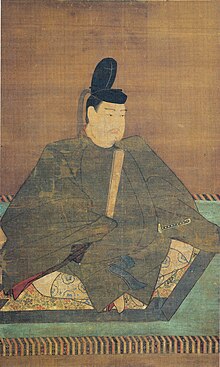
The holiday has its origins with the institution of worship on that day by the 8th Century Japanese Emperor Shomu. The first official records of its celebration date to the year 806 CE when the government of Japan required all priests in Kokubun-ji temples to recite the Diamond Sutra at the Autumnal Equinox.
 |
| Emperor Shomu |
Higan in Japanese literally means "the Other Shore." The term can refer to crossing to the other shore from the material world (i.e., to Enlightenment). The term can also refer to the transitory nature of the the material world (as all things are impermanent and must die, thus crossing to the other shore).
In Japan, Higan is traditionally a day for honoring the graves of the dead. The Guide to Japanese Buddhism of the Japanese Buddhist Federation explains:
During this period, it is customary for Buddhists throughout the country to visit temples and graves. They bring flowers, incense, water or their favorite food to be to be offered to the deceased and greet them with refreshed minds to report on their well-being.
Higan is also traditionally one of the days for the beginning of pilgrimages among the country's temples by the devout.
CHINESE AND VIETNAMESE MOON FESTIVAL
The Autumnal Equinox is celebrated as the Moon Festival or Moon-Cake Festival in Chinese and Vietnamese traditons. In both countries, the holiday is an official day off. Also in all three countries, the holiday dates back thousands of years.
In Vietnam, the holiday is called Tết Trung Thu. The holiday focuses in large part on children, and has its origins in giving parents the opportunity to be with their children after long periods out of their company during the traditional harvest time. Because of this, the holiday is often called the "Children's Holiday."
Tết Trung Thu is the second most important in the year after Tet. In China, the holiday is also given considerable importance. The holiday is particularly marked by the traditional Lion Dance with lion dancers going door to door asking to dance. These are often performed by children, although professional lion dancers are a part of main events.
In China, the holiday is known as Zōngqiū Jié. In Chinese tradition, the holiday has its origins in the tale of the mythical Chang-E who ate her husband's dangerous elixir to save him, and flew to the moon as a consequence where she became the moon goddes. As with Vietnamese traditions, the Moon Festival is tied to the Fall Harvest.
While the origins of the Chinese Moon Festival predates historical records, the first known observances go back to at least the Zhou Dynasty (1046-256 BCE).
In many Han Chinese traditions, sacrifices are made to the moon. In many Chinese ethnic minorities, unique customs are practiced. For example, among the Dong people, there is a custom of "stealing" harvested vegetables and fruit (this is, however, only symbolically stolen as these are set out for the purpose). The Bouyei people worship the Moon Grandmother, and bring rice cakes to her shrine. The Maonan people put incense in a hanging grapefruit, to represent the moon. Finally, in some Mongolian traditions, there are practices centered on chasing the moon.
 |
| Vietnamese Moon Festival Lion Dancers |
Tết Trung Thu is the second most important in the year after Tet. In China, the holiday is also given considerable importance. The holiday is particularly marked by the traditional Lion Dance with lion dancers going door to door asking to dance. These are often performed by children, although professional lion dancers are a part of main events.
 |
| Chang-E's flight to the moon |
While the origins of the Chinese Moon Festival predates historical records, the first known observances go back to at least the Zhou Dynasty (1046-256 BCE).
In many Han Chinese traditions, sacrifices are made to the moon. In many Chinese ethnic minorities, unique customs are practiced. For example, among the Dong people, there is a custom of "stealing" harvested vegetables and fruit (this is, however, only symbolically stolen as these are set out for the purpose). The Bouyei people worship the Moon Grandmother, and bring rice cakes to her shrine. The Maonan people put incense in a hanging grapefruit, to represent the moon. Finally, in some Mongolian traditions, there are practices centered on chasing the moon.
In all traditions, the festival celebrates the autumnal harvest. As the name Moon-Cake Festival suggests, it is customary to eat Moon Cakes at this time.
In Vietnam, Moon Cakes are called banh trung thu and are made up of ground beans, lotus and egg yolks. These are sold at street corners throughout Vietnam and made at home as well. A recipe for banh trung thu can be found on the Viet World Kitchen site at:
http://www.vietworldkitchen.com/blog/2009/10/how-to-make-moon-cakes-banh-trung-thu.html
 |
| Vietnamese Banh trung thu |
http://www.vietworldkitchen.com/blog/2009/10/how-to-make-moon-cakes-banh-trung-thu.html
KOREAN CHUSEOK
Chuseok is an official holiday in both North and South Korea. Its name means "Eve of Autumn" and the holiday represents wishes for the coming of a good harvest. Chuseok is a time for seongmyo, the honoring of ancestors' graves, including beolcho (sweeping and weeding the area). Food offerings are made to the ancestors in many traditions. Among these traditional foods, while some are offered, many also are eaten, most notably songpyeon rice cakes.
As always in these write-ups, I welcome your feedback. This in no way endorses one practice or another. It is merely meant to be informational.
Please feel free to send me corrections or things you would like me to include next time (and feel equally free to let me know if you find these worthwhile).
CONCLUSION
As always in these write-ups, I welcome your feedback. This in no way endorses one practice or another. It is merely meant to be informational.
Please feel free to send me corrections or things you would like me to include next time (and feel equally free to let me know if you find these worthwhile).
May you have a balance in your life on this Autumnal Equinox and a happy Moon Festival!
WANT TO READ MORE?
On Wiccan, neo-Pagan and neo-Druidic traditions:
Crystal Links, "Autumn Equinox -- Mabon": http://www.crystalinks.com/autumn.html
Mystic Familiar, "Alban Elfed -- Autumn Equinox": http://www.mysticfamiliar.com/library/witchcraft/alban_lfed.html
Sagento A, Spell Research, "A Mabon Outline": http://spellresearch.com/spellbook/1993/10/12/a-mabon-outline.html
Wicca Chat, "Mabon": http://www.wicca-chat.com/witch_sabats/mabon.htm
Wiggington, Patti, About.com -- Paganism/Wicca, "All About Mabon, the Autumn Equinox": http://paganwiccan.about.com/od/mabontheautumnequinox/a/AllAboutMabon.htm
On Higan
Japanese Buddhist Federation, Guide to Japanese Buddhism, "Major Japanese Buddhist Festivals":http://www.buddhanet.net/nippon/nippon_partII.html
Zenku Smyers, Zen Buddhist Temple of Chicago, "The Other Shore": http://www.zbtc.org/downloads/zenku-othershore.html
Time and Date, "September Equinox Customs": http://www.timeanddate.com/calendar/september-equinox-customs.html
On the Moon Festival
China Culture, About.com, "The Moon Festival": http://chineseculture.about.com/library/weekly/aa093097.htm
Michael Tartaski, Holidaysia, "Tet Trung Thu 2013 – Vietnam’s Mid-Autumn Festival": http://www.holidaysia.com/events/tet-trung-thu/
Passion Vietnam, "Full Moon (Mid-Autumn) Festival": http://www.passionvietnamtravel.com/en/nord-du-viet-nam/full-moon-mid-autumn-festival.html
Travel China Guide, "Mid-Autumn Festivals": http://www.travelchinaguide.com/essential/holidays/mid-autumn.htm
Fang Yang, Xinhua News Agency, "The Mid-Autumn Festival and Its Traditions": http://news.xinhuanet.com/english2010/culture/2011-09/12/c_131134150.htm
CLIP ART SOURCES
Autumn equinox opening clip art: http://www.examiner.com/images/blog/EXID22753/images/AutumnEquinox.jpg
A Wiccan Mabon altar: http://paganwiccan.about.com/od/mabontheautumnequinox/p/MabonAltarDecs.htm
Green Man of the Forest: http://salemsmoon.files.wordpress.com/2013/09/greenman1_thumb.jpg?w=198&h=205
Mabon blessings: http://www.owlsdaughter.com/wp-content/uploads/2010/09/Mabon_Blessings_by_FullMoonArtists.jpg
Guido Reni's Archangel Michael Trampling Satan: http://en.wikipedia.org/wiki/File:Guido_Reni_031.jpg
Emperor Shomu: http://upload.wikimedia.org/wikipedia/commons/thumb/3/3f/Emperor_Shomu.jpg/220px-Emperor_Shomu.jpg
Vietnamese Moon Festival Lion Dancers: http://www.passionvietnamtravel.com/en/nord-du-viet-nam/full-moon-mid-autumn-festival.html
Chang-E's Flight to the Moon: http://upload.wikimedia.org/wikipedia/commons/b/b3/The_Moon_Goddess_of_Chang%27e_%28Shi_Yu%29.jpg
Vietnamese banh trung thu :http://www.vietworldkitchen.com/blog/2009/10/how-to-make-moon-cakes-banh-trung-thu.html