The Islamic observance of the holy month of Ramadan (رمضان) for 2020 begins on (or near to, depending on the sighting of the moon) the evening of Thursday, April 23 and ends on the evening of Saturday, May 23 with the concluding holiday of Eid al Fitr.
As with all Islamic holidays, the actual date depends on the sightability of the moon. While the most commonly accepted date for this year is for sunset of April 23, some debate exists among certain sects as to whether the sighting of the moon should be on the same day as the sighting of the moon in Mecca or the day following. Because I have received criticism for stating one date only in the past, let me state clearly here that this overview is meant to be informational only and is in no way intended to indicate that one view or the other is correct.
All
students, employees and faculty who request it, should be accommodated.
For most Muslims, the first and last days of Ramadan are usually spent
in worship and students, employees and faculty should be excused from
activities if requested. Some Muslims also observe an exclusion period
in the mosque (Iʿtikāf ) during the last 10 days of Ramadan and may need accommodation.
Importantly,
during the entire month of Ramadan, believers fast during the daylight
hours. Part of accommodation should therefore include discouraging
others from eating or drinking in class or in other settings where
attendance is mandatory. Consideration should also be given to requiring
attendance at meetings where food is served (as in serving meals or
snacks during the meeting).
Ramadan: Islam’s Holy Month
Ramadan is a time of worship and contemplation in Islam. Ramadan is observed by all sects. The month of Ramadan – the ninth in the Islamic lunar calendar -- is also when it is believed the first verses of the Koran were sent down from heaven in 610 CE.
It should be noted, however, that this was not the Koran in its entirety which was revealed through the Prophet Mohammed (عليه السلام) during a 23-year span (only concluding in 632 CE).
Shared Ramadan Observances
While Ramadan customs vary from culture to culture, almost all Muslims share in common the observances of fasting, prayer and the conclusion of the month with Eid al-Fitr. The observance of Ramadan is a central practice of the faith, and its observance is one of the Five Pillars of Islam.
Fasting or Sawm (صوم)
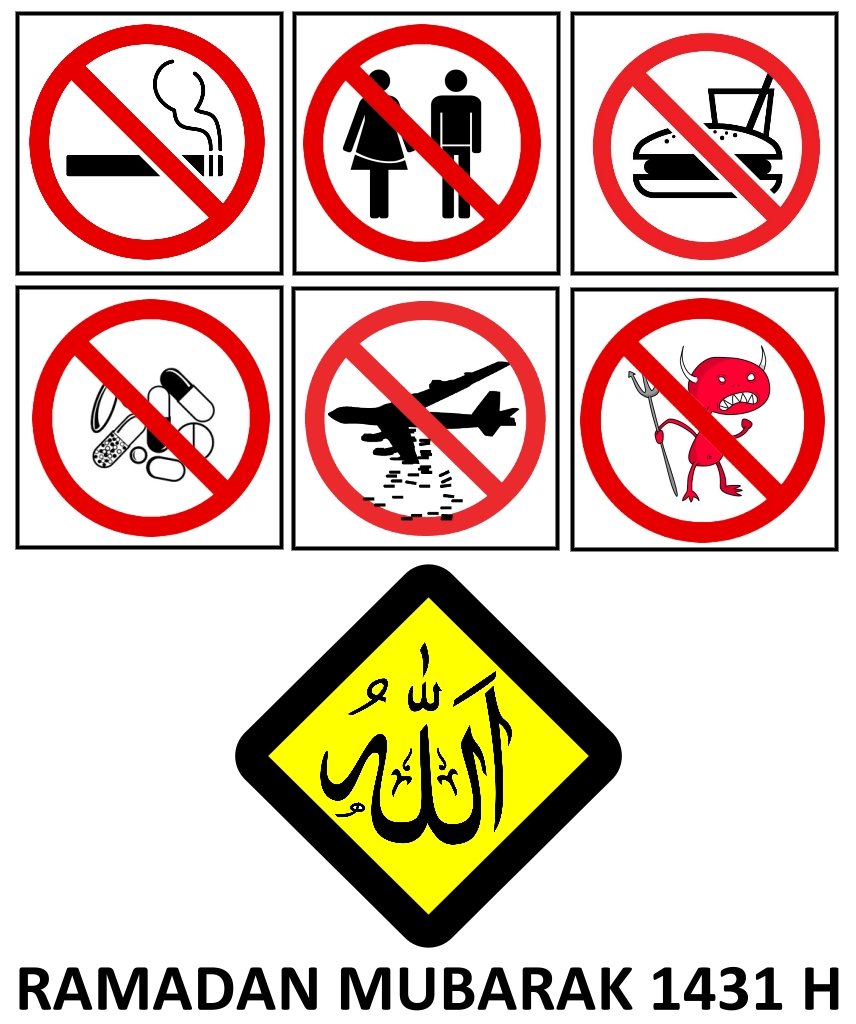
Muslims observing Ramadan fast during daylight hours. The fast includes all food, drink, recreational drugs, sex and tobacco. Most Muslims also consider the fast to include a ban on evil thoughts, gossip, lying, cheating and fighting from dawn to sunset.
Those observing Ramadan will usually want to break their fast at sunset. Breakfast or lunch meetings, snacks brought for a class and the like should be reconsidered accordingly. Also, even employees, students and others who may not always observe the prayer at the setting of the sun (Maghrib) may do so during this month (note that if it is not possible for students to pray at the appointed times, they are permitted to pray as soon as they can after that – which might, for example, affect an student’s willingness to stay after class or an employee to stay late for a project). Each day the fast is broken with prayer and a meal called the iftar (إفطار ).
Taraweeh ( تراويح) and the Recitation of the Koran
In the evening following the iftar it is common for many people to go to the mosque for Taraweeh or night prayers. Many also go to visit family and friends and recite the prayers together there. Some schools of thought consider Taraweeh compulsory while others consider the prayers voluntary but strongly encouraged. The actually number and nature of the pairs of rakaʿāt recited also vary according to sect and custom. Because feelings run very deeply on this issue and I do not wish to in any way appear to endorse one practice or another, it may be best to refer to the reading lists at the end of this post to read about these different views.
Many Muslims recite out loud the whole Koran during the month of Ramadan. This is in imitation of what the Prophet Mohammed (عليه السلام) during his lifetime. Some families have a tradition of gathering together as an extended family or in groups of friends to recite the Koran as a group activity. In nations with Muslim majority populations or in which Islam is the state religion, the recitation of the Koran is often broadcast over radio and television stations.
Iʿtikāf ( اعتكاف)
 |
| Lailat ul Qadr |
Though not a requirement, many Muslims choose to go into a state of Iʿtikāf or seclusion (usually in a mosque) for a period during Ramadan. This is most commonly for the last ten days of Ramadan so that they can be praying and reading the Koran on Lailat ul Qadr. Lailat ul Qadr or the Night of Power was the night in which the first verses of the Koran were revealed to the Prophet Mohammed (عليه السلام. The Koran teaches that "Lailat ul Qadr is better than a thousand months" (Sura 97: 3) and so prayers are much greater in power then. Nevertheless, the actual night of Lailat ul Qadr remains unknown, except that it occurs within the last ten days (some believe last five days) of Ramadan.
Conclusion of Ramadan with Eid al-Fitr
Depending on sightability of the moon, the evening of Thursday, July 7 will be the start of Eid al-Fitr. The festival marks the end of the month-long fast of Ramadan. It is traditionally a time for meals with the extended family and friends that lasts for two or three days.
Muslims also give Zakat ( زكاة) or alms to the poor throughout Ramadan. Muslims especially give alms to the poor in honor of Eid. This is called Zakat al-Eid. Typically, people give a donation (in food or cash or both) to the poor. Many Muslim communities set up charity tables and public food kitchens or booths for the poor Eid al-Fitr comes at the end of a month of particular piety and dedication to God, the holiday is also a time for giving forgiveness and praying for peace and unity.
The traditional Arabic greeting for the Eid is “Eid mubarak” which more or less translates as “Blessed Eid” or just “Happy Eid” (which can be said as well, of course).
Ramadan and the COVID-19 Pandemic
This year -- for Ramadan in 2020 -- Muslims must consider how the global COVID-19 pandemic will affect the holy month.
Restrictions around the world demand social distancing, curfews and stay-at-home lockdown laws in place to fight the spread of the virus. This, in turn, restricts gatherings for iftar and public charity tables and centers. These are now banned or heavily curtailed in most countries. Likewise Ramadan in many countries is a time of crowded street stalls and bazaars selling food, clothing and more. These too have been shut down or heavily limited because of the need to curb the spread of the virus.
Even public prayer in mosques has been prohibited in many nations. Iran's Supreme Leader Ayatollah Ali Khamenei has called on people to avoid collective gatherings (although without directly banning them). Saudi Arabia's has ordered the shortening of prayers with public attendance at the Two Holy Mosques at Medina and Mecca, and the continued closure of mosques at all other mosques. Islam's third holiest place, the al-Aqsa Mosque in Jerusalem, is also closed to public attendance.
Mosques and public gatherings will continue to be closed throughout Ramadan in many Muslim-majority countries including Egypt, Jordan, Algeria, Kuwait, Oman, the UAE and Qatar. Morocco's mosques remain closed through (at this time of writing) May 20 (so most of Ramadan). Tunisia has warned that COVID-19 carriers infecting others will be prosecuted for manslaughter. Bangladesh had suspended public prayers but mass protests followed. It remains unknown if the country can actually enforce its ban. Indonesia, which has the world's largest Muslim population, has closed mosques in affected areas -- including Jakarta -- while allowing gatherings where the virus has not reached. Travel across the country has been restricted or eliminated entirely. This eliminates the annual mudik or annual mass travel of people home to see family (in 2019, 19.5 million people made that journey home).
Some major Muslim countries have, however, bucked the trend and left open or re-opened mosques. Most notable of these is Pakistan, which has the world's second largest population. The restrictions on gatherings in mosques set in place in March have been lifted for Ramadan in Pakistan.
Bahrain has allowed for some public prayers in its al-Fateh Grand Mosque. The worshippers and clerics, though, will follow strict social distancing rules.
Finally, in Muslim-minority countries mosques (as most religious sites such as churches and synagogues) will remain closed for Ramadan. This includes most of Europe, Australia, Canada and most of the states of the United States among others.
What follows in the section below is a description of traditional Ramadan traditions in different countries. Almost all of these include public gatherings. Likewise the discussion above regarding joining in groups to break the fast and to go to the mosque involve large gatherings as well. Beyond the share observances described above, customs vary from country to country. Only a few of these are described below (but please add in the comment section those from your own traditions).
Ramadan Customs Around the World
Beyond the share observances described above, customs vary from country to country. Only a few of these are described below (but please add in the comment section those from your own traditions).
Albania
Ramadan (in Albanian Ramazani) has particular significance in Albania. Under Communist rule, Albanians were prohibited from signs of worship. Ramadan was significant, though, since fasting could not be detected by the atheist authorities. With the end of the repressive regime of Enver Hoxha in 1991, though, public worship for Muslims and Eastern Orthodox Christians alike began to flourish. It is significant that virtually no religious conflict occurs between Muslims and Christians in Albania (unlike the neighboring countries of the former Yugoslavia where religion had not been banned). Indeed, at Ramadan, Muslim children now commonly share trays of Ramadan treats with their Christian counterparts just as the Christian children share Easter eggs with their Muslim friends. It is also not uncommon for Muslims to be invited Christians to their homes to break the fast with them even though the Christians were not fasting, and some Christians hold meals for breaking the fast in their own homes for their Muslim friends.

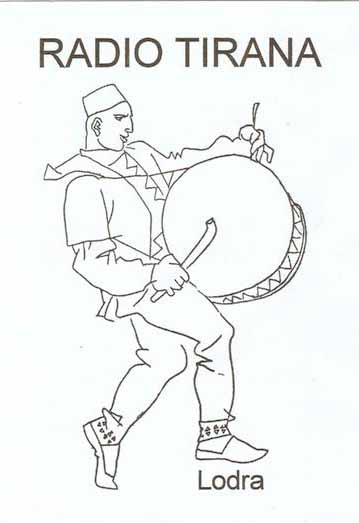
Since the fall of Communism, the Ramadan drumming of the lodra through the streets is common again. The lodra is the national instrument and appears on images for Radio Tirana. Men go through the streets beating a lodra so that people wake up to eat can eat before the sun rises. The man returns beating the lodra as the sun sets to announce the breaking of the fast.
 |
| Albanian byrek |
While Albanians offer a wide variety of food in different parts of the couuntry to break the fast, one of the most common Ramadan specialties is byrek. This is a a fried pastry made of phyllo dough and stuffed with spinach, meat or milk curd. People eat byrek cold or heated up depending on preference. A recipe for Albanian byrek is available at
Egypt
Egypt comes alive at night during Ramadan. Shops, often closed during the day, stay open into to 3:00 or 4:00 in the morning and buildings are strung with lights and other decorations.
 |
Fanoos lanterns for sale
in Cairo |
Children celebrate Ramadan with a fanoos or traditional Ramadan lantern. These lantern are constructed of tin with colored glass (or sometimes plastic) panes through which shines the light from a candle placed in side.
One particularity for Egypt is fairly modern as Egypt grew to become center for Arabic-language television. To mark Ramadan, the Egyptian entertainment industry introduces over half of all Egyptian TV serials produced each year.
 |
| Ful medames |
Special foods also mark Ramadan in Egypt. Traditionally, Egyptians begin their morning meal with ful medames. Often considered Egypt's national dish, ful medames dates back to the time of ancient Egypt and the Pharaohs. The dish is made of fava beans simmered together with olive oil, lemon juice, garlic and other spices. One recipe for ful medames is available at:
The traditional Ramadan drink of Egypt is called Qamar el-din. This is made from sheets of dried apricot paste boiled in water.
India and Pakistan
 |
| Hands decorated with henna |
In India and Pakistan, Muslim girls traditionally dress festively with gold or multicolored bracelets and bangles. It is common for Ramadan in general -- and especially for Eid-- for girls to paint each others’ hands with mehndi (henna designs).
 |
| Samosas |
While Ramadan foods vary from region to region throughout India and Pakistan, one food common to iftar throughout both countries is the samosa. A samosa is a fried, triangle-shaped pastry stuffed with any number of fillings. These can include vegetables, meat, chicken, potatoes and more.This accompanied with a dipping chutney of, from among others, mint, coriander, tamarind. In fact, there are so many varieties of samosas, that an entire site is dedicated to them at
Indonesia
 |
| Bedug |
The end of the day's fast in Indonesia is traditionally heralded by pounding of the bedug, a special drum for the occasion. Even in urban areas where an actual bedug may not be played, broadcasts of the sound of the drum are broadcast over radios and televisions. On the last night of Ramadan (called Lebaran), bedug players are often joined by large groups of musicians who play well into the night in a celebrative parade.
 |
| Panjat pinang pole-climbing |
In many Indonesia towns and especially in Jakarta, panjat pinang pole-climbing competitions are held at Ramadan. The poles are made from nut trees that have been smoothed down and covered with grease. No one person is usually able to climb the pole, so the climbing is usually a group effort. At the top of the pole are a collection of small prizes called panjat pinang. When someone reaches the top and grabs any of the prizes, they share them with those who helped them up the pole.
At the end of Ramada on Eid al-Fitr (called Idul Fitri in Bahasa Indonesia), it is customary in most Indonesian villages to go on Mohon Maaf visits following morning prayers. Mohon Maaf comes from the phrase “Mohon Maaf Lahir Batin” which means "forgive me from the bottom of my heart for my wrongdoings in the past year." Generally, the visits go in order of the most senior member of a family down and at each house, with food provided at each stop along the way.
 |
Indonesians trapped in traffic
in Karawang at conclusion of Eid al-Fitr |
Many Indonesians have roots in the countryside even if they live in the large cities. This poses a special problem for Indonesia each year at Ramadan, as millions of people leave the cities for their hometowns. While many people in other countries leave for their hometowns as well at Ramadan, the situation is arguably at its most extreme in Indonesia. The expatriate information site "Living in Indonesia" estimated that last year for Ramadan 2011 over 7 million people left Jakarta alone to go visit their traditional homes. The crush of traffic at both the beginning and end of Ramadan therefore predictably overtaxes the national transportation infrastructure each year.
Malaysia
 |
Malays shopping for flowers
for Ramadan |
For Malays, people traditionally visit not only living relatives but also to visit graveyards to visit those relatives who have passed on. Ramadan is often a time of brightly-colored decorations and clothing among Malays. Many people decorate their homes with flowers and women in particular often wear colorful headscarves.
 |
A Ramadan Bazaar
in Kuala Lumpur |
Throughout Malaysia on Ramadan, it is common to see "Ramadan bazaars." These are Ramadan counterparts to the year-round Malaysian night markets (pasar malam). Instead of opening at night, though, the Ramadan markets open in the late afternoon as people buy their food for the evening post-fasting meal. It should be noted that in Malaysia's multicultural society, the Ramadan bazaars are very popular with non-Muslims and Muslims alike.
Qatar
 |
| Qatari children dressed for Garangao |
Qataris celebrate the 14th day of Ramadan with a special celebration called Garangao. The night of Garangao is a children's celebration. Children dress in traditional clothing, sing a special Garangao song for their families at home and are rewarded with sweets.
After
this, the tradition is somewhat akin to the North American Halloween as
the children go door to door for what is called a "nutting night out"
as the children collect nuts and other treats from neighbors. Some
Kuwaiti children, like their counterparts in Qatar, also celebrate Garangao in the middle of the holy month.
Kuwait
 |
Firing the cannon
at Naif Palace |
Since the arrival of the first cannon in Kuwait in 1907, it has been a tradition at Naif Palace in Kuwait City to fire a cannon shot to mark the end of the fast. It is customary to bring children to the gather around the cannon before iftar so they can celebrate in the blast. In recent years, the children have been joined by tourists -- both Muslim and non-Muslim alike -- for whom the blasts have become a Ramadan attraction.
 |
| Luqmat Al-Qadi |
On the eve of the first night of Ramadan, Kuwaitis celebrate with a pre-Ramadan festivity called Graish. At Graish, people gather with family and friends and welcome the holiday with the foods traditional to Ramadan in Kuwait. These include dates and special sweets such as Luqmat Al-Qadi. Luqmat Al-Qadi are balls of dough mixed with saffron, cardamom, milk and butter that are boiled in fat and then rolled in syrup or sugar. A recipe for Luqmat al-Qadi can be found at:
Incidentally during Ottoman times, Luqmat al-Qadi made its way from the Gulf countries to Turkey as lokma and Greece as loukmades. Luqmat al-Qadi is also the source from which the Indian and Pakistani gulab jaman originally derived.
Kyrgyzstan
Traditionally at Ramadan, the Kyrgyz accompany their evening meal with drinks made from special Ramadan kurut. A kurut is a dried yogurt ball.
 |
Ramadan kurut balls
Osh Bazaar, Bishkek |
Normal kurut are fairly small and extremely salty. By contrast, the special Ramadan kurut are roughly the size of someone's fist and are much salty. While regular, small-sized kurut are available all year long where they are sold throughout the country in plastic jars, the special Ramadan kurut are much harder to come by, and as a result are a special thing for most Kyrgyz. These special Ramadan kurut are sold only in the Osh Bazaar in the capital city of Bishkek.
The Kyrgyz use Ramadan kurut to make a variety of Ramadan beverages. The balls are dissolved in carbonated water and mixed with tomatoes and onions for a savory drink. The balls are dissolved in hot water and mixed with sugar and creamy oil for a dessert drink. In either case, the kurut drinks are special for the holiday and represent a one-time-a-year tradition.
Mauritania
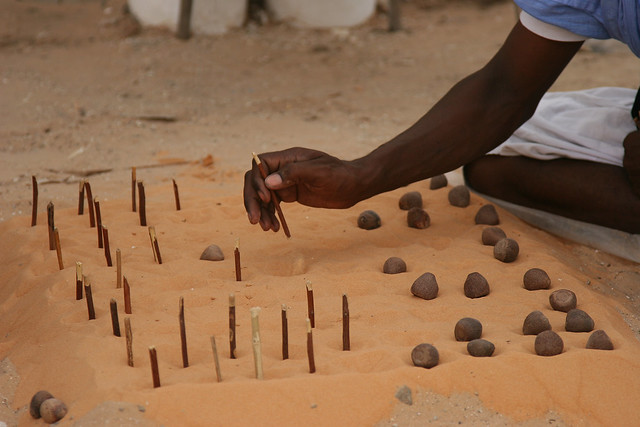
Ramadan in Mauritania is a time when traditional games are played, especially among women.
What is particularly unusual in this tradition is that the games are primarily played by women in what is otherwise a primarily male-oriented society when it comes to competitions.
As the Mohamed Yahya Abdel Wedoud in his article "Mauritanians mark Ramadan with traditional games and neighbourly visits" explains:
After prayers, traditional games such as ekrour and essik dominate the Ramadan nightlife, especially for women. Women throughout the country form teams and compete with each other.
 |
| Mauritanian woman playing traditional Ramadan game |
Morocco
 |
| A Morrocan n'far blowing his horn |
In Morocco, a tradition exists in which a n'far (a special Ramadan equivalent to a town crier) walks down the streets playing a long, one-note n'far horn (similar to a brass vuvuzela) in the morning to wake everyone up in time for the last meal before sunrise. In many towns, being selected as the n'far is a high honor and usually bestowed upon an individual who knows everyone in the neighborhood well.
 |
| Moroccan chebbakia |
Morocco is famous for its many special Ramadan treats, especially sweets. These include the anise and sesame-seed bread called qrashel, the turnover-like briwat, the crepe-like baghrir, and especially that most famous of all Moroccan sweets: the honey-soaked, sesame-sprinkled chebbakia.
One recipe for chebakkia can be found at http://moroccanfood.about.com/od/tipsandtechniques/ss/How_to_make_Chebakia.htm
Turkey
Ramazan (the Turkish name of Ramadan) is generally a festive time throughout Turkey. Buildings and trees, especially in rural areas, are decorated with colored lights and booths are set up for the month selling traditional foods, religious books and a wide variety of Ramazan specials.
 |
| Lokum (Turkish delight) |
Throughout the small towns of Turkey and even in some larger cities, special Ramazan drummers go through the street banging on drums. Their purpose is to wake people before the sun rises so they have time to eat.
The three days after Ramazan concludes is celebrated with the Sugar Festival (Şeker Bayramı) when -- as the name suggests -- sweets and candies are eaten. Traditionally, in addition to offering sweets to friends and family at home, children go from door to door ask for candy. Most famous of the many sweets offered is lokum, known through most of the world as "Turkish delight." A recipe for the treat can be found at
Concluding Comment
As with all of my commentaries, this overview is meant only as an informational message. It in no way is meant to suggest that one interpretation is in any way better than another regarding how to celebrate Ramadan
That said, I am open to your input. Please feel free to share your comments for improvement (or support for that matter) with me. Ramadan Mubarek!
Want To Know More?
Clip-Art Credits
Opening clip art: http://i1.squidoocdn.com/resize/squidoo_images/250/draft_lens19160628module157196200photo_1330258970aaa__a.jpg
Ramadan fast clip art (adapted from): http://fc09.deviantart.net/fs71/f/2010/224/f/3/RAMADAN_MUBARAK_1431h_by_bx.jpg
Mosque clip art: http://www.clker.com/cliparts/8/2/2/f/1282647222988584111mosque.svg.med.png
Lailat ul-Qadr clip art: http://sapnamagazine.com/wp-content/uploads/2010/09/laylat-al-qadr.jpg
Radio Tirana lodra: http://web.mclink.it/MJ0350/libera/tirana/tiran19.jpg
Albanian byrek: http://en.wikipedia.org/wiki/File:Evb%C3%B6re%C4%9Fi.jpg
Egyptian fanoos lanterns for sale: http://www.touregypt.net/featurestories/ramadanlanterns.htm
Henna hands: http://www.america.gov/multimedia/photogallery.html#/30145/multi_ramadan/
Samosa: http://recipesnest.com/wp-content/uploads/2010/12/samosa.jpg
Bedug drum: http://1.bp.blogspot.com/_kXYte55FGyo/SKQqfZtVKkI/AAAAAAAAAN8/wTs3t3m6iMo/s320/bedug.jpg
Panjat pinang pole climbers: http://www.odditycentral.com/pics/panjat-pinang-a-slippery-tradition-of-thailand.html
Indonesians trapped in traffic in Karawang at conclusion of Eid al-Fitr: http://i.telegraph.co.uk/multimedia/archive/01712/ramadan-indonesia2_1712808i.jpg
Ramadan flowers for sale in Malaysia: http://www.america.gov/multimedia/photogallery.html#/30145/multi_ramadan/
Ramada Bazaar, Kuala Lumpur, Malaysia: http://allmalaysia.info/2011/08/19/ramadan/
Qatari children dressed for Garangao: http://www.cbq.com.qa/NewsDetails.aspx?id=344
Iftar cannon, Naif Palace, Kuwait: http://www.q8nri.com/home/2010/08/17/iftar-cannon-a-source-of-attraction-in-kuwait-in-ramadan/
Luqmat al-Qadi: http://en.wikipedia.org/wiki/File:Loukoumades.jpg
Ramadan kurut balls, Osh Bazaar, Bishkek: http://students.sras.org/what-bishkek-eats-for-ramadan/