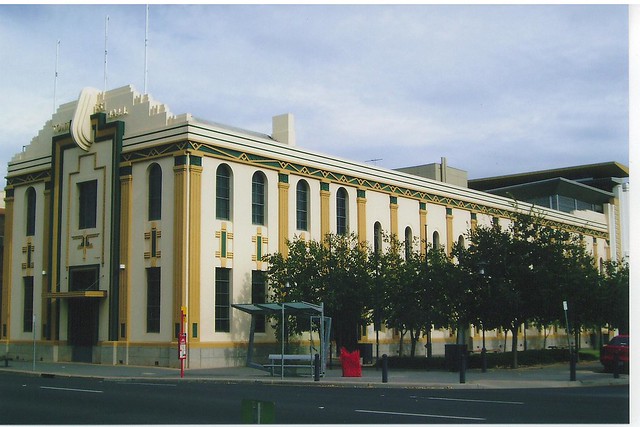
Art Deco, though born in France, is sometimes mistakenly seen as a US and Canadian movement. While it is true that it was in North America that Art Deco architecture found its greatest and most prolific flowering, many of the greatest Art Deco buildings were built elsewhere.
This blog attempts to point out some (by no means all) of the major Art Deco architects outside North America. This is an eclectic list, representing my own (openly amateur) appreciation. This is by no means a comprehensive overview. For a fuller (though still incomplete) list of Art Deco architecture outside the United States and Canada, please see my post on the subject at http://davidvictorvector.blogspot.com/2014/07/art-deco-outside-north-america.html
There is a counterpart for US and Canadian Art Deco buildings at
http://davidvictorvector.blogspot.com/2014/07/notable-art-deco-architectural.html
French architects
This blog attempts to point out some (by no means all) of the major Art Deco architects outside North America. This is an eclectic list, representing my own (openly amateur) appreciation. This is by no means a comprehensive overview. For a fuller (though still incomplete) list of Art Deco architecture outside the United States and Canada, please see my post on the subject at http://davidvictorvector.blogspot.com/2014/07/art-deco-outside-north-america.html
There is a counterpart for US and Canadian Art Deco buildings at
http://davidvictorvector.blogspot.com/2014/07/notable-art-deco-architectural.html
French architects
Art Deco may take its name from the French but France, the birthplace of the movement, a has several major contributing architects to the movement.
René Levavasseur was one of the earliest French architects of note. His buildings were primarily
constructed in the port of Cherbourg which is where his Trans-Atlantic Station, Atlantic Hotel and Grand Magasins Ratti stand. His Trans-Atlantic Station (Gare Transatlantique) of 1925 was well-kn own in the United States where the influence of its design may arguably be seen.
#mediaviewer/Fichier:Cherbourg-Gare-transatlantique-pano.jpg) |
| René Levavasseur's Trans-Atlantic Station, Cherbourg |
 |
| Louis Castel and Jacques Droz's Church of Sainte Jeanne d'Arc, Nice |
Albert Laprade was one of the most important architects of the era. He is most famous for his Villa Magdalena at Bénodet in Brittany and for his collaboration with Alfred Janniot on Paris' Palais de la Porte Dorée (now the Museum of Immigration. Laprade also was the architect behind several industrial projects including the Génissiat Dam, Injoux-Génissiat in the Rhône-Alpes, and the EDF Central Hydroelectric Plant at Bâthie (also in the Rhone-Alpes)
Auguste Bluysen was one of the more prolific Art Deco architects in France. He designed several casinos including the Casino du Lac at Bagnole-de-l'Orne amd tje Casino de Vittel. He was also was the architect behind several notable theaters including Paris' Grand Rex Cinema, Paris' Théâtre de la Michodière and La Normandy Cinema (after it burned down as was rebuilt in 1927) at Touquet-Paris-Plage in the Pas de Calais.
 |
| Auguste Blusen's Casino de Vittel |
Other notable French Art Deco architects include Léon Baille (best known for his Belvédère du Rayon Vert in Cerbère), the Russian-born Charlotte Perriand (one of the few women architects of the era, known for her interior design primarily but also for her buildings such as the innovative apartments on Rue Casimir Pinel Apartments in Neuilly-sur Seine). Max Sainsaulieu is the architect who designed the Carnegie Library at Reims and Contréxeville Station in the the Vosges department.
Three more of France's most important Art Deco architects are better known for their work in Brazil than in France.
Brazilian architects
 |
| Biarritz Building, Rio de Janeiro |
#mediaviewer/File:Cristo_Redentor_Rio_de_Janeiro_4.jpg) | |
| Christ the Redeemer Rio de Janeiro |
.JPG) | |
| Plinio Botelho do Aramal's Bank of São Paulo Building |
Other major Brazilian Art Deco architects include Plínio Botelho do Amaral was the architect behind the Bank of São Paulo (today the Altino Arantes Building), for decades that cities tallest building. Plinio Botelho do Amaral also collaborated with (the future modernist architect Alfonso Eduardo Reidy to create Rio's Fórum Ministro Arnaldo Süssekind skyscraper. Raphael Galvão (another future modernist) designed Rio's Roxy Theater as well as the Casa Cavé and Cine Ipanema. Eduardo Pederneiras and Ernesto G. Fontes on Rio's Paysandú Hotel.
 |
| Rino Levi's Porchat Building, São Paulo |
Other major Brazilian architects of Rio's Carioca Art Deco era include Arnaldo Gladosch (Itahy Building), Carlos Porto and Caio Moacyr (Petronio Building), Mario Santos Maia (Regional Labor Court) and Leopoldo Queiroz (Copacobana's Brasil Building).
Uruguayan architects
Montevideo is one of the Art Deco capitals of the world. A confluence of factors met in the 1920's. Uruguay's 100th anniversary as a nation in 1925 came just as Art Deco made its appearance. This was also a time of considerable prosperity for the country. Uruguay wanted also to show its modernity and relatively greater economic development than some of its neighbors, and this was symbolized by the Art Deco Movement. As Montevideo began to expand in size, it erected buildings to show its wealth and modernity as well as its national pride on its centennial. The result is a collection of Art Deco unrivaled in Latin America.
 |
| Juan María Aubriot and Ricardo Valabrega's Palacio Lapido, Montevideo |
UK architects
Scotland
 |
| Archibald Leitch's Arsenal Stadium, London in its original form |
England
English Art Deco architects include England's premier cinema designer George Coles. Marcus Evelyn Collins and Owen Hyman Collins were the architects behind the Egyptian Deco masterpiece of the Carreras Cigarette Factory in London. The building is often cited as the highpoint of the Egyptian Revival Art Deco movement.
 |
| M. E. Collins and O. H. Collin's Carreras Cigarette Factory, London Highpoint of Egyptian Revival Deco |
 |
| Sunlight HouseManchester |
Thomas Cecil Howitt's career spanned much of the 20th Century, with buildings covering a broad range of architectural styles. In the 1920's and 1930's, Howitt created many Art Deco landmarks, including Birmingham's Baskerville House as well as its Municipal Savings Bank (Broad Street Head Office), produced a series of Art Deco movie houses for Odeon Cinemas at Weston-super-Mare and Bridgwater both in Somerset, at Warley in the West Midlands and at Clacton in Essex. Howitt was also the architect behind one of the most important examples of Art Deco in Wales, the Newport Civic Centre.
Wales
Wales has several important Art Deco buildings, but most are the product not of Welshmen but of English architects. As mentioned above, Thomas Cecil Howitt was the architect behind the Newport Civic Centre.
Wales' most important Art Deco architect, Sir Percy Edward Thomas, was actually an Englishman too. Although born in South Shields in Tyneside, Thomas can nonetheless claim more Welsh connection as his family moved from England to Cardiff as a child. Thomas created the Guildhall at Swansea, arguably the most important Art Deco building in Wales. The Guildhall is an example of Greek Deco (or "stripped Classical") design. It is, however, the Guildhall's clock tower that is justifiably most famous. Possibly the only example of what one could call "Viking Deco," the 48-meter-high clock tower at one part echoes the features of a Viking longboat, and carries an Art Deco bas relief of Sweyn Forkbeard, the founder of what would become Swansea who became the first of the Danish Viking Kings of Britain in 1013. Thomas was also the architect behind the Art Deco Cardiff Central Rail Station. and the Welsh Temple of Peace and Health.
Finally, Sir Bertram Williams-Ellis is the only truly Welsh architect of major note, although ironically he too was born in Northamptonshire. William-Ellis is best known for his Portmeirion, the recreation of an Italian village in North Wales that is anything but Art Deco. That said, he is also the architect behind the Morannedd Cafe in Cricceth, an intentionally Art Deco building built, however, in 1954 as a tribute to Art Deco well after the Art Deco movement had ended in the UK. That said, Williams-Ellis did design several Art Deco buildings during the actual movement itself, such as the White House in Llandudno in North Wales.
New Zealand
Napier, New Zealand is one of the main centers of Art Deco architecture in the world, and for an unusual twist of fate. Napier was struck by a devastating earthquake in 1931. Because of its near total destruction, New Zealand's architect converged on the city and brought Art Deco there along with them. New Zealand's premier Art Deco architects were Louis Hay and E. A. Williams.
Louis Hay's works in Napier include Halsbury Chambers, Hawkes Bay Museum, the National Tobacco Company Building, Anderson & Hansen Motors, the Hildebrandt Building, Parkers Chambers, the Abbots Building and the AMP Building (now home to the New Zealand Wine Center). Hay's Napier Central Fire Station has even been converted into the city's Deco Centre, for preserving its rich Art Deco architectural heritage.
Just as prolific to the Napier Art Deco reconstruction as Louis Hay was New Zealand's E. A. Williams. Some of his major architectural works in Napier include the Daily Telegraph Building, Daslgety's Building, the Scinde Building, Harston's Music Shop, Masson House, Hawkes Bay Chambers, the Fenwick Building, the Crown Hotel and the Criterion Hotel.
Other Art Deco architects from New Zealand also contributed to the Napier Art Deco rebuilding. These include J. T. Mair (designer of the Napier Post Office Building and its Telegraph Exchange), H. Alfred Smith (architect of the Kidsons Building and Smith & Chambers Trust Building), J. T. Watson (architect of the Napier Municipal Theatre, Thackeray House and the Loo Kee & Company Building) and and Edmund Anscombe (creator of the New Zealand Shipping Company Building and the Union Hotel).
Australia
Charle Bruce Dellit is the architect behind the ANZAC War Memorial, one of the best-known Art Deco monuments in the world. Dellitt was also the architect behind several other Art Deco buildings including the Kinselas Hotel and Kinselas Chapel in Darlington, and the Randwick Ritz in Randwick.
The Sydney Harbour Bridge is the best-known Art Deco bridge
outside the United States. The iconic structure was primarily designed by John J. C. Bradfield, who was an engineer not an architect.. Bradfield was also the designer of the Art Deco Circular Quay Railway Station, located just beside the bridge.
Australia's master theater architect of the Art Deco era was Henry Eli White. White designed over 130
theatres in Australia and New Zealand. His State Theatre in Sydney is generally considered the apex of Art Deco Theatre design in Australia. Other theaters designed by White include the Capitol and St. James theaters (both in Sydney), the Majestic in Newtown, and the Tivoli in Brisbane. White also designed many theatres in New Zealand, such as the St. James Theatre in Wellington.
Wales has several important Art Deco buildings, but most are the product not of Welshmen but of English architects. As mentioned above, Thomas Cecil Howitt was the architect behind the Newport Civic Centre.
 |
| Sir Percy Edward Thomas' Swansea Guilhall features Sveyn Forkbeard's portrait |
Wales' most important Art Deco architect, Sir Percy Edward Thomas, was actually an Englishman too. Although born in South Shields in Tyneside, Thomas can nonetheless claim more Welsh connection as his family moved from England to Cardiff as a child. Thomas created the Guildhall at Swansea, arguably the most important Art Deco building in Wales. The Guildhall is an example of Greek Deco (or "stripped Classical") design. It is, however, the Guildhall's clock tower that is justifiably most famous. Possibly the only example of what one could call "Viking Deco," the 48-meter-high clock tower at one part echoes the features of a Viking longboat, and carries an Art Deco bas relief of Sweyn Forkbeard, the founder of what would become Swansea who became the first of the Danish Viking Kings of Britain in 1013. Thomas was also the architect behind the Art Deco Cardiff Central Rail Station. and the Welsh Temple of Peace and Health.
Finally, Sir Bertram Williams-Ellis is the only truly Welsh architect of major note, although ironically he too was born in Northamptonshire. William-Ellis is best known for his Portmeirion, the recreation of an Italian village in North Wales that is anything but Art Deco. That said, he is also the architect behind the Morannedd Cafe in Cricceth, an intentionally Art Deco building built, however, in 1954 as a tribute to Art Deco well after the Art Deco movement had ended in the UK. That said, Williams-Ellis did design several Art Deco buildings during the actual movement itself, such as the White House in Llandudno in North Wales.
Malaysia
Virtually all of Kuala Lumpur's extensive Art Deco architecture has its origins with one man: English architect Arthur Oakley Coltman. Coltman brought Art Deco to Malaysia, then called Malaya, a colony of the British Empire. Coltman produced a long list of major works including Kuala Lumpur's iconic Market Square Clock Tower. Other works of Coltman's in Kuala Lumpur include the Oriental Building, the Bagunan Lee Rubber Building (Nan Yi Building), the Rubber Research Institute of Malaysia, the Odeon Theatre, the Overseas-Chinese Banking Corporation (OCBC) Building, and the Anglo-Oriental Building (now known as Wisma Ekran).
 |
| Arthur Oakley Coltman's Market Square Clock Tower Kuala Lumpur |
Virtually all of Kuala Lumpur's extensive Art Deco architecture has its origins with one man: English architect Arthur Oakley Coltman. Coltman brought Art Deco to Malaysia, then called Malaya, a colony of the British Empire. Coltman produced a long list of major works including Kuala Lumpur's iconic Market Square Clock Tower. Other works of Coltman's in Kuala Lumpur include the Oriental Building, the Bagunan Lee Rubber Building (Nan Yi Building), the Rubber Research Institute of Malaysia, the Odeon Theatre, the Overseas-Chinese Banking Corporation (OCBC) Building, and the Anglo-Oriental Building (now known as Wisma Ekran).
New Zealand
Napier, New Zealand is one of the main centers of Art Deco architecture in the world, and for an unusual twist of fate. Napier was struck by a devastating earthquake in 1931. Because of its near total destruction, New Zealand's architect converged on the city and brought Art Deco there along with them. New Zealand's premier Art Deco architects were Louis Hay and E. A. Williams.
 |
| Louis Hay's Central Fire Station Napier, New Zealand now the Deco Centre of Napier |
 |
| E. A. William's Masson HouseNapier, New Zealand |
 |
| J. T. Watson'sLoo Kee & Co. Building, Napier |
Australia
 |
| Charles Bruce Dellit's ANZAC War Memorial, Sydney |
Charle Bruce Dellit is the architect behind the ANZAC War Memorial, one of the best-known Art Deco monuments in the world. Dellitt was also the architect behind several other Art Deco buildings including the Kinselas Hotel and Kinselas Chapel in Darlington, and the Randwick Ritz in Randwick.
The Sydney Harbour Bridge is the best-known Art Deco bridge
outside the United States. The iconic structure was primarily designed by John J. C. Bradfield, who was an engineer not an architect.. Bradfield was also the designer of the Art Deco Circular Quay Railway Station, located just beside the bridge.
 |
| John J. C. Bradfield's Sydney Harbour Bridge |
 |
| Henry Eli White's State Theatre, Sydney |

The architects E. H. Henderson and Cuthbert Claude Mortier Whitley produced several important Art Deco buildings in Canberra. E.H. Henderson was the architect behind the Manuka Swimming Pool and Canberra House. Cuthbert Claude Mortier Whitley was the architect behind the Canberra's Patent Office, Ainslee Primary School and Canberra High School (in the suburb of Acton).
Mackay, Queensland became the center of what has been called the Queensland Deco style, and is home to over 25 important Art Deco buildings. A major fire coupled with a population explosion and economic boom resulted in one of the greatest Art Deco outputs worldwide. Two architects were largely responsible for most of these Mackay's Art Deco buildings. Harold V. M. Brown and Edwin R. Orchard collaborated on over half (13) of the cities Art Deco masterpieces, including Chaseley House, Holy Trinity Parish Hall, the Belmore Arms, the Metropolitan Hotel, Hotel Mackay (now the Lucky Aussie Hotel) and the Pioneer Shire Office Building. That said, perhaps the most iconic Art Deco building in Mackay is the Ambassador Hotel designed by the builder Dave Pratt.
Chris Marsh was the architect behind many of the Art Deco building is South Australia. These include the renovation of the , the Capri Theatre in Goodwood, the Brighton Council Municipal Offices, the Greenways Residence in Prospect, and the masterful Hindmarsh Town Hall in Adelaide
Hungary
In Hungary, Art Deco found resistance as Hungarians clung to the Art Nouveau of the now-collapsed Austro-Hungarian Empire. The irony of clinging to Art Nouveau (the NEW art) as a way of holding on to the old is noteworthy. That said, even in this atmosphere, Art Deco surfaced in the work of Béla Jánszky and Tibor Szivessy. The two collaborated on a number of Art Deco buildings in Budapest including the Puskin Cinema, the Urania Nemzeti Cinema, the 82 Radnóti Miklós Street Building and the Kossuth Lajos Secondary School.Other Hungarian Art Deco architects include Béla Hofstätter and Ferenc Domány who collaborated on Budapest's Odeon Lloyd Egyptian Theatre, and Lajos Kozma who designed the Art Deco Kner-Villa.
Another Hungarian architect, László Hudec, was responsible for many Art Deco buildings but not Hungary but in Shanghai. Hudec's works in Shanghai includes the Park Hotel, Paulun Hospital, the Wukang Building (formerly Normandie Apartments) among others.
The Netherlands
The most famous Art Deco building in the Netherlands is Amsterdam's Tuschinski Theater, among the most beautiful theaters in the world. The architectural genius behind the the building was Hijman Louis de Jong whose life was sadly cut short when he and the man who commissioned it -- Abraham Icek Tuschinski -- were both murdered at Auschwitz by the Nazis for the crime of being Jews (the theater was temporarily renamed "the Tivoli" under the Germans to rid it of its "Jewish name"). When de Jong's Tuschinski Theater opened in 1921, it was one of the earliest examples of what would become Art Deco in its transition from what had been Art Nouveau.
The Dutch architect Jans Bilsen was the architect of Drie Hoefijzers Building in Breda. Also from the Netherlands was Jan Duiker who in his early work produced several Art Deco buildings before his own transition to the sparser New Objectivity (or Nieuwe Zakelijkheid) Movement which he helped to found. These include the Cineac Cinema in Amsterdam and, in collaboration with Bernard Bijvoet, the Zonnestraal Sanatorium in Hilversum.
Indonesia
 |
| Dave Pratt'sAmbassador Hotel, Mackay |
Mackay, Queensland became the center of what has been called the Queensland Deco style, and is home to over 25 important Art Deco buildings. A major fire coupled with a population explosion and economic boom resulted in one of the greatest Art Deco outputs worldwide. Two architects were largely responsible for most of these Mackay's Art Deco buildings. Harold V. M. Brown and Edwin R. Orchard collaborated on over half (13) of the cities Art Deco masterpieces, including Chaseley House, Holy Trinity Parish Hall, the Belmore Arms, the Metropolitan Hotel, Hotel Mackay (now the Lucky Aussie Hotel) and the Pioneer Shire Office Building. That said, perhaps the most iconic Art Deco building in Mackay is the Ambassador Hotel designed by the builder Dave Pratt.
 |
| Chris Marsh's Hindmarsh Town Hall, Adelaide |
Chris Marsh was the architect behind many of the Art Deco building is South Australia. These include the renovation of the , the Capri Theatre in Goodwood, the Brighton Council Municipal Offices, the Greenways Residence in Prospect, and the masterful Hindmarsh Town Hall in Adelaide
Hungary
 | ||
| Béla Jánszky and Tibor Szivessy's Uranaia Nemzeti Cinema, Budapest |
Another Hungarian architect, László Hudec, was responsible for many Art Deco buildings but not Hungary but in Shanghai. Hudec's works in Shanghai includes the Park Hotel, Paulun Hospital, the Wukang Building (formerly Normandie Apartments) among others.
The Netherlands
 |
| Tuchinski Theater, Amsterdam |
 | |
| Jan Duiker and Bernard Bijvoet's Zonnestraal Sanatorium, Hilversum |
Indonesia
 |
| Albert Aalbers' Savoy Homann Hotel Bandung, Indonesia |
Dutch architects active in Indonesia included Albert Aalbers, Henri Maclaine-Pont and Wolff Schoemaker who together transformed Bandung, Indonesia (then part of the Dutch East Indies) into an Art Deco highpoint. Aalbers' work in Baudung includes the Savoy Homann Hotel, DENIS Bank and (south of Bandung at Garut) the Grand Hotel Ngamplang.
Henri Maclaine-Pont (Dutch despite the rather un-Dutch name) was a major proponent of blending local culture into Art Deco architectural styles. This is exemplified by his so-called "Tropical Dutch" buildings on the campus of ITB (Bandung Technical Institute). Maclaine-Pont intentionally used local materials and indigenous roof design mixed with the "ultimate bungalow" villas of the San Francisco architects Julia Morgan and Bernard Maybeck to created an Art Deco, Javanese bungalow for non-residential use.
 |
| Henri Maclaine-Pont's Tropical Dutch Art DecoWest Hall, Bandung Technical Institute |
 |
| Wolff Schoemaker's Villa Isola |
The Philippines
 |
| Juan Nakpil's Quezon HallUniversity of the Philippines, Manila |
Chief among these Filipino Art Deco architects was Juan Nakpil -- called the "Father of Philippine Architecture" --was the premier Filipino architect of the Art Deco period. His works include the Rizal Shrine at Intramuros, the Captain Pepe Building and Capital Theater in Manila, and his Art Deco masterpiece Quezon Hall Administration Building at the University of the Philippines.
Another major Filipino Art Deco architects is Juan Arellano, architect of the Cebu Provincial Capitol. Arellano also co-designed with fellow Filipino Art Deco architect Pablo Antonio Manila's National Museum of the Philippines (former Legislative Building).
Italy
Italy in the interwar years saw a mix of influences. None of this was openly called Art Deco, and some of it was clearly the opposite of the modernization characteristic of the movement; this is especially notable with the Novecento Italiano movement (the attempts to revive Italy's ancient architectural forms. Art Deco in Italy, however, was evident in the "New Rationalism" or "Fascist Architecture" (depending on one's politics). The result are a mix of styles.
_facciata_piacentini_1010030.JPG) |
| Marcello Piacentini's Teatro dell'Opera, Rome |
Ettore Sottsass, Sr.'s Meran Town Hall in the South Tyrol was held up as a paragon of Fascist
architecture when it was built, but would be called Art Deco were it to have been built somewhere else. This is equally the case with Marcello Piacentini's Palazzo Piacentini in Reggio Calabria (now the Museo Nazionale della Magna Greci) or his facade for the Teatro dell'Opera in Roma.
Falling somewhere between Art Nouveau and Art Deco (and arguably more Art Deco) is the "Liberty Architecture" movement that was unique to Italy. The region of Versilia is a major centers of the style, with works especially of note by Afredo Belluomini such as the Bagno Balena, Supercinema and Viareggio's Caffè Margherita.
Eritrea
In an odd twist of circumstances, Art Deco found one of its greatest flowerings in Asmara, the capital of what is now Eritrea and was at the time an Italian colony.
 |
| Giuseppe Pettazzi's FIAT-Tagliero station Asmara, Eritrea |
Giuseppe Pettazzi was the leading architect responsible for converting the then-Italian colony of Eritrea into an Art Deco center. His FIAT-Tagliero in Asmara is a classic Art Deco work. Pettazzi was the leading architect responsible for converting the then-Italian colony of Eritrea into an Art Deco center. His FIAT-Tagliero in Asmara is a classic Art Deco work.
Several dozen Art Deco buildings rose out of the Eritrean desert, making it one of the most architecturally modern cities not only in Africa but anywhere in the world. Among the most notable of the architects involved were Bruno Salfani who built the Casa del Fascio (Fascist House), Roberto Cappellano who built the Cinema Roma, Carlo Mazzetti who created the IRGA Building, Antonio Vitaliti who designed the Villa Grazia, and the Albergo Italia which was a collaboration of Johannes Primo and Carlo Iachino.
CONCLUSION
This has been a very small sampling of some of the architects who contributed to the Art Deco movement in architecture outside of North America. There are dozens of others who probably deserve to be mentioned. This is only one person's personal tastes reflected here.
For an overview of some notable Art Deco buildings from XX countries around the world, please see my earlier post Art Deco Outside North America.
As always, I welcome your comments and input.
René Levavasseur's Trans-Atlantic Station, Cherbourg, photo by Thbz: http://fr.wikipedia.org/wiki/René_Levavasseur_(architecte)#mediaviewer/Fichier:Cherbourg-Gare-transatlantique-pano.jpg
Church of Sainte Jeanne d'Arc, Nice, photo by Patrice Semeria: https://en.wikipedia.org/wiki/Sainte_Jeanne_d%27Arc_Church,_Nice#mediaviewer/File:Saint_Joan_of_Arc_-_Nice_-_France.jpg
Auguste Bluysen's Casino de Vittel: http://fiul.weebly.com/news/visiter-les-vosges-avec-marylou-tour-the-vosges-with-marylou12
Biarritz Building, Rio de Janeiro, photo by Daniel Casoy: http://www.sajous-henri.com/documents%20sajous/HENRI%20SAJOUS/OBRAS%20SAJOUS/RIO%20DE%20JANEIRO/edificio%20biarritz/Daniel%20Casoy%20%20Biblioteca%20ViverCidades%20P.jpg
Christ the Redeemer statue, Rio de Janeiro, Photo by JC Salmon: http://en.wikipedia.org/wiki/Christ_the_Redeemer_(statue)#mediaviewer/File:Cristo_Redentor_Rio_de_Janeiro_4.jpgPlinio Botelho do Aramal's Bank of São Paulo Building, photo by Filipe Mostarda: http://en.wikipedia.org/wiki/Altino_Arantes_Building#mediaviewer/File:Banespa_(By_Felipe_Mostarda).JPG
Rino Levi's Porchat Building, São Paulo: http://armazemperisc.blogspot.com/2012/06/nem-o-melhor-nem-o-pior.html
Juan María Aubriot and Ricardo Valabrega's Palacio Lapido, Montevideo, photo by Federico Corral: http://es.wikipedia.org/wiki/Palacio_Lapido#mediaviewer/Archivo:Palacio_Lapido.jpg
Arsenal Stadium, London: http://en.wikipedia.org/wiki/File:Arsenal_Stadium_Highbury_east_facade.jpg
Sweyn Forkbeard's portrait, Swansea Guildhall, photo by L. M. Perry: http://en.wikipedia.org/wiki/Guildhall,_Swansea#mediaviewer/File:Sweyn.jpg
Carreras Cigarette Factory, London, photo by M@ggie on Panoramio: http://static.panoramio.com/photos/large/55475223.jpg
Sunlight House, Manchester: https://www.wantspacegotspace.co.uk/uploads/users/365/files/02_May_2012/NORTH/Sunlight_House.jpg
Market Square Clock Tower, Kuala Lumpur: http://blog.audioguidemalaysia.com/page/11/
Charles Bruce Dellit's ANZAC War Memorial, photo by Hpeterswald: http://en.wikipedia.org/wiki/ANZAC_War_Memorial#mediaviewer/File:ANZAC_War_Memorial.jpg
John J. C. Bradfield's Sydney Harbour Bridge, photo by JJ Harrison: http://en.wikipedia.org/wiki/Sydney_Harbour_Bridge#mediaviewer/File:Sydney_Harbour_Bridge_from_Circular_Quay.jpg
Dave Pratt's Ambassador Hotel, Mackay: http://www.busaroundglobe.com/globe/country/australia_globe/au-41_en.htm
Canberra House: http://www.abc.net.au/news/2010-09-23/parliament-house-canberra/2351368
Chris Marsh's Hindmarsh Town Hall, Adelaide: https://c2.staticflickr.com/2/1325/1317888890_00d6839bc8_z.jpg
Louis Hay's Deco Centre, Napier, New Zealand: http://www.napier.govt.nz/services/planning-and-resource-consents/heritage-buildings/building?rid=49
E. A. Williams' Masson House, Napier New Zealand:vhttp://www.napier.govt.nz/services/planning-and-resource-consents/heritage-buildings/building?rid=90
J. T. Watson's Loo Kee & Co. Building, Napier: http://www.napier.govt.nz/services/planning-and-resource-consents/heritage-buildings/building?rid=86
Béla Jánszky and Tibor Szivessy's Uranaia Nemzeti Cinema, Budapest: http://lakjonjol.hu/cikk/meleg-burkolas/299-a-mozgokep-legszebb-palotai#
Tuchinski Theater, Photo by Amsterdam Municipal Department for the Preservation and Restoration of Historic Buildings and Sites (bMA): http://en.wikipedia.org/wiki/File:Haltusch.jpg
Jan Duiker and Bernard Bijvoet's Zonnestraal Sanatorium, Hilversum, photo by Jannes Linders: http://www.wmf.org/node/2088
Albert Aalbers' Savoy Homann Hotel, Bandung, Indonesia, photo by Jagawana: https://en.wikipedia.org/wiki/Albert_Aalbers#mediaviewer/File:Savoy_Homann_Hotel_-_Oceanwave.jpg
Henri Maclaine-Pont's Tropical Dutch West Hall, Bandung Technical Institute, Photograph by Christian Wopperer: http://thisflyingdutchman.blogspot.com/2012/12/bandung-is-like-paris-err-sorta.html
Wolff Schoemaker's Villa Isola, Bandung, photo by Bandung Traveler: http://bandungtraveler.com/wp-content/uploads/2012/07/VILLA-ISOLA.jpg
Juan Nakpil's Quezon Hall, photo by kriseldajocson: http://kriseldajocson.wordpress.com/2012/03/
Giuseppe Pettazzi's FIAT-Tagliero station, Asmara: http://www.ign.com/boards/threads/culture-porn-daily-post-10-6-2013-fiat-tagliero-building.453415253/
Marcello Piacentini's Teatro dell'Opera, Rome: http://en.wikipedia.org/wiki/Teatro_dell%27Opera_di_Roma#mediaviewer/File:Castro_Pretorio_-_teatro_dell%27Opera_di_Roma_(Costanzi)_facciata_piacentini_1010030.JPG
Giuseppe Pettazzi's FIAT-Tagliero station, Asmara: http://www.ign.com/boards/threads/culture-porn-daily-post-10-6-2013-fiat-tagliero-building.453415253/
Marcello Piacentini's Teatro dell'Opera, Rome: http://en.wikipedia.org/wiki/Teatro_dell%27Opera_di_Roma#mediaviewer/File:Castro_Pretorio_-_teatro_dell%27Opera_di_Roma_(Costanzi)_facciata_piacentini_1010030.JPG


#mediaviewer/File:State_thearte_front2.JPG)