I had a friend recently state that she was "pro-Palestinian."
I am not sure
exactly what that means any more than to say that I am, for instance, “pro-Irish”
(I go there a lot, both of my daughters do Irish dancing, and one speaks a bit of Gaelic, has performed twice at Doolin and was the
front singer and bodhrain-player in an
Irish band, etc.).
This seems a silly statement since it begs the question of how can you be pro or con any nationality per se.

The only exception would be if you believe that a country does not have the right to exist. Then you can be "anti" whatever. I am, for example, anti-Confederate States of America (e.g., I don't want the South to rise again).

I am in this context, pro-Palestinian too I
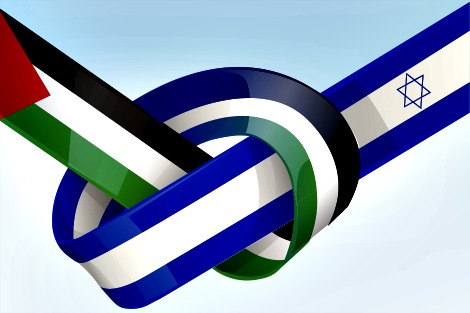
suppose since (unlike the government in Gaza) I support a two-state solution
that ensure the right of both Palestine and Israel to exist. I am opposed to
the current Israeli government’s actions in building Jewish settlements in the
West Bank. I support Israel's right to self-defense but believe they have made a muck
of it by responding with such overwhelming force in response to a few hundred
rockets fired on Israeli cities. They have responded with a gun in a
knife-fight essentially.
 |
| Old enough to decide on his own? |
I should note that I am opposed to indoctrinating the very young into political issues. I am disturbed when I see little children waving "Free Palestine" flags or banners that read "Hamas is a terrorist organization." Personally, I don't think they are old enough to decide... and this plays to emotion rather than reason. It is rather sad really.
Israel has not done well in securing public opinion. Gaza is seen through the lens of its long-suffering Palestinian
civilians rather than a brutal, ineffective and self-serving regime under
Hamas. Both are true.
Palestinians in Gaza are living in unbearable
circumstances, but those circumstances are, in my view, a result of the misrule
of the Hamas government. Hamas has been designated as a terrorist
organization not only by Israel and the United States, but also by Australia, Canada,
Japan, Jordan and – since 2003 – the European Union. Egypt has been on again
off again on this (they are on now as listing Hamas as a terrorist
organization). It strikes me as odd that
among these, only the EU nations are demanding that Israel negotiate with an organization
with whom their own government’s prohibit negotiation.
 While I find it unlikely that -- without responding --
France or Britain would allow themselves to be the subject of two rocket
attacks let alone over a hundred (the number that hit Israeli civilian targets before it attacked back), I recognize that Europe holds Israel to a different
standard than it holds itself.
While I find it unlikely that -- without responding --
France or Britain would allow themselves to be the subject of two rocket
attacks let alone over a hundred (the number that hit Israeli civilian targets before it attacked back), I recognize that Europe holds Israel to a different
standard than it holds itself. There are a number of reasons for the European double standard. These include
- guilt over past colonial rule in the Arab-speaking countries (especially on the left)
- the importance of the Muslim community as a voting bloc (especially in France) and politicians' perception that Muslims must be anti-Israel as a whole (rather than perhaps a highly vocal minority)
- a tendency to favor the underdog in conflicts (especially the case in England, Ireland, Sweden and Norway) and Israel is the strongest military and economic power in the region, and
- an intractable anti-Semitism of both the old right-wing variety and the new Zionism as racism variety. As Martin Luther King said, "When people criticize Zionists, they mean Jews. You're talking anti-Semitism here."

 |
| Gaza gas field |
Finally, it is possible that European guilt over the Holocaust contributes to the allowance of Israel conducting genocide accusations (a form of projection that is absurd on the face of it and amazingly unleveled at actual genocides in Cambodia, the Mayans in Guatemala (1966-96), the Timorese in Indonesia (1975-1999), Kurds in Iraq (1988), the Mbenga (Pygmies), in DRC (1998-2003), or for that matter the Yazidi in Iraq by the IS (so-called Islami State) right now.
The Palestinian situation is not acceptable as it stands. There
is much suffering not only now during the Gaza fighting but before then in both
the West Bank and Gaza (though much worse in Gaza due to its misrule). Notwithstanding
this, that world opinion focuses more the Palestinian issue than on similar
issues in other regions/countries is to me inexplicable unless prejudice
against Israel as the Jewish state is
put into the calculations. I certainly don't believe that all criticism of
Israel even remotely constitutes anti-Semitism. The policies of Israel are
hotly contested within Israel and it seems unlikely that Israelis themselves
would be motivated by anti-Semitism. That said, there is a double standard with
regard to Israel that smacks of Jew-hatred.
First, as mentioned above, I find it beyond belief that
France, Belgium, the UK or other EU nations would allow themselves to be
attacked by several hundred rockets without a similar response. That is a
double standard. The fact that there is a pre-existing situation of
helplessness on the part of the Gazans or of outrage over the killing of Jewish
and Palestinian children (the supposed trigger this time) does not take away
from this point as one of bias.
Second, there are currently a dozen disputed regions, each
with considerable suffering with thousands of refugees and meriting our
attention as much as that of Palestine. That is NOT to say that Palestine
merits less of our attention but the focus on Palestine relative to the
inattention to the equally important suffering of others here is hard to
explain. While the suffering endured by the Gazans under attack make the
current situation different from those I am about to list, my point here is
that even without the Gaza crisis, the Israel/Palestine situation receives far
more attention than any of the following:
- The division of Northern Cyprus and Greek Cyprus (part of the EU no less!)
- The former Spanish Sahara (Polisario) occupied over the wishes of its residents by Morocc
- Abkhazia’s occupation of/rightful claim by Russia
- South Ossetia’s occupation of/right claim by Russia
- Chechya’s occupation of/rightful claim by Russia
- Transnistria’s occupation of/ rightful claim by Russia
- Tibet’s disputed occupation of/rightful claim by China
On a less territorial plane, the Myanmar attacks on its
Muslim Rohingya population and the deportation of the Roma from France (as well
as the ongoing persecution of Roma communities in Hungary, Romania and other EU
nations) have left many refugees with great suffering, a virtually no world
outcry. There are more but the point here but that is not the point. The point
here is that Israel is the focus of much greater scrutiny than any of these
other situations.
Again, that does not mean that I condone any mistreatment of Palestinians.
I don’t. It does mean that something is amiss with world attention.
I have written on this before on my blog (see http://davidvictorvector.blogspot.com/2011/11/some-musings-on-palestine-israel.html
) but it merits repeating perhaps.
My own position is that the world believes that when Israeli
civilians are attacked, Israel should not respond in kind. I actually agree if
the goal is to make Israel safer and to force Palestine to recognize Israel’s
right to exist. Non-violence I believe is
probably more effective here since any
use of force here transforms Israel from victim to aggressor in world opinion.

I am a firm believer that violence begets violence in an unending cycle. You kill my daughter and I can never forgive you and I seek revenge. I kill your son who killed my daughter and you can never forgive me until you seek revenge. Now multiply this by the thousands killed in Gaza. This is unwinnable. As Martin Luther King taught, nonviolence is the only solution to such problems, as the only means for us "to overcome oppression and violence without resorting to oppression and violence."
Israel can only win the war of public opinion
through taking the position of non-violence. This is NOT to play the part of the helpless victim but to recognize the power of nonviolence, whether with civil rights in the US, overthrowing the British Empire in India or, yes, finding peace in the Middle East. In my own lifetime, this worked after 400 years of conflict in Northern Ireland (and, yes, I was a supporter of the Irish Republican side, but I still believed in nonviolence).
In the Israeli context, though, nonviolence in the form of unanswered missile attacks or kidnapped, unarmed teenagers echoes the long history of playing the role of the victim. This means ironically for the most-persecuted group in history needing to take on once again the role of victim. This is all hte more grating because this is the role that Europeans in particular want Jews to hold as their traditional role.
That is blunt but I would be hard pressed to give another reading from the Israeli perspective. That said, I DO have one: nonviolence. Nonviolence is NOT victimhood. It is the tool of a brave, committed and powerful belief that has at its foundation, as Dr. King reminds us, "a method of love."
Hatred and open conflict have not much worked. I believe that this will.
 As for the link of anti-Semitism to Jew-hatred, this is not absolute... but there IS a connection.
Newsweek made this clear in their August 8 cover story "Exodus: Why Europe's Jews Are Fleeing Once Again": “These people were not attacked because
they were showing their support for the Israeli government. They were
attacked because they were Jews, going about their daily business."
What is happening this time and what happened previously is
that Israel is seen not as defending itself but as crushing a weaker opponent,
which in reality is probably the truth. If Israel’s goal is to be safer (and I
believe that this is a legitimate goal), its invasion of Gaza has not achieved
that end. Israel clearly can win any battle with Gaza but has made its position
more precarious. The hatred of Jews that
lies just under the surface in Europe and that is official policy in Palestine
(and unofficial policy in several Gulf states) is a factor here. Israel is not
judged as a nation. It is judged as the country of the Jews – hence the
pro-Gaza demonstrations in Paris, Toulouse, Brussels, Antwerp, Berlin and more
that had posters and group cries with
the slogan “Death to the Jews”, “To the gas chambers” and so on. Posters bearing the images of the most hate-filled variety tend to delegitimize legitimate posters calling for Israel to stop its attack in Gaza.
 |
| Free Gaza rally, Stuttgart, July 29, 2014 |
 |
| Parisian Jewish-owned pharmacy gutted in solidarity with Gaza |
 |
| Hamas logo |
Finally, there is the issue of Hamas. Even though I support an independent Palestine and a separate Israel, I do not support Hamas, even as the elected government of
Gaza. Why?
\ Articles 7, 22 and32 of the Hamas Charter are
appalling in their Jew-hatred, and prohibit the allowance of Israel’s right to
exist. By contrast, I support a two-state solution and believe in Israel’s
right to exist.
Hamas restricts freedom of the press, and has
been condemned not only by the non-Hamas press but by Reporters Without Borders
(see, http://en.rsf.org/palestinian-territories-hamas-disbands-journalists-union-06-09-2007,23565.html
). Both the PA and Israel allow freedom of the press (it may be biased, but
there is no restriction from the government). I support freedom of the press
and distrust governments that do not.
Hamas has one of the worst human rights records
in a region famous for poor human rights records. Hamas in 2012 was roundly
condemned in a 42-page report by Human Rights Watch (which by the way is no
friend of Israel and has called that government out for abuses as well, just
nowhere as egregiously so). I admit that neither the PA nor Israel have clean
human rights records, but they appear to try to correct these abuses rather
than – as Hamas systematically does -- suppress them by attacking the press or
others who bring complaints into the light. http://www.hrw.org/world-report-2012/world-report-2012-israeloccupied-palestinian-territories
I have more reasons, but I think those are enough to give you an idea of my position.
I am not expecting everyone to agree with me on what I have said here, but I thought it was easier than writing a series of emails or Facebook responses to people who have asked me my views. Let me also state that this position does not reflect anything to do with anywhere that I work, and is only my own opinion. That opinion is not set in stone, and I am only indicating how I see things at present.
That said, I am praying for peace in the Middle East... not only in Gaza but in Syria, Iraq, Egypt, Libya and Mali and more. I hope that you will join me as well.

Clip Art Sources:
Ireland Forever:http://i209.photobucket.com/albums/bb55/HarborWholesale/Stencils/IrelandForever4x20.jpg
Old enough to decide on his own? http://previous.presstv.ir/photo/20110602/asadi_s20110602022210670.jpg
Two-state yin-yang: http://upload.wikimedia.org/wikipedia/commons/8/84/Israel_Palestine_one-state_binational_flag.jpg
Two-state ties: http://www.eurekastreet.com.au/uploads/image/14/41652.jpg
Dry Bones double standard cartoon: http://media.cagle.com/49/2012/11/15/122423_125.gif
M. L. King on Zionism: https://www.facebook.com/wjc.org/photos/a.10150309946314805.363449.130945114804/10152572537859805/?type=1&theater
Gutted Jewish-owned pharmacy in Paris: http://en.wikipedia.org/wiki/Hamas#mediaviewer/File:Small_hamas_logo.gif
Stuttgart pro-Gaza anti-Jewish rally, http://mystical-politics.blogspot.com/2014/07/anti-semitism-at-pro-gaza-rallies-in.html
Gaza gas field: http://www.globalresearch.ca/is-israels-operation-protective-edge-really-about-natural-gas/5393103
Hamas logo: http://en.wikipedia.org/wiki/Hamas#mediaviewer/File:Small_hamas_logo.gif
Jerusalem hug: https://www.facebook.com/hugjerusalem