Welcome to the David Victor Vector Blog

Welcome to the David Victor Vector blog. This is blog that covers religious observances around the world international affairs and global business. This blog describes religious holidays for most major religions as well as raising issues dealing with globalization, international business ethics, cross-cultural business communication and political events affecting business in an integrated world economy. I look forward your discussion and commentary on these articles and subjects. Enjoy!
Showing posts with label Tsagaan Sar. Show all posts

Sunday, January 15, 2012

Year of the Dragon: Lunar New Year Celebrations Around the World


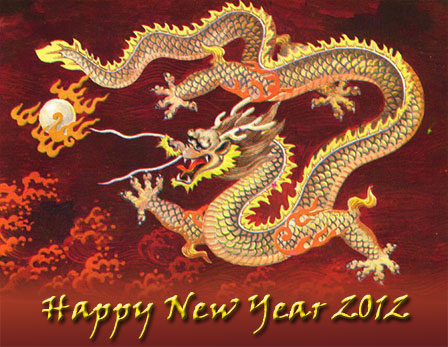
Poster for Year of the Dragon
Festivities, Toronto, Ontario
This is the fourth and final post on the Asian Lunar New Year which begins a week from tomorrow on Monday January 23. Today’s post first indicates where the Lunar New Year is an official state holiday. The post then goes on to share the wide range of events taking place outside of those countries.


A TIME OF SLOW DOWNS AND   TIME OFFS

The Asian Lunar New Year is a public holiday with varying lengths in several countries.

Many Chinese, Bhutanese and Mongolian communities unofficially are closed for the entire New Year’s week (including the preceding or following weekends in many cases). The dates of observance for Tet in Vietnam and Seol in Korea may extend well beyond the official dates as well, especially in rural areas. This somewhat parallels the slowing or shutting down of work and school for Christmas in Europe, Australia, New Zealand and the Americas.

OFFICIAL STATE HOLIDAYS

The Asian New Year in various countries is officially recognized by the state in 15 countries, as follows:


Bhutan
Bhutan: Officially off for Losar but the dates are not officially specified. As some festivities last up to 15 days, this means that the time when things are open or closed is somewhat unclear for about two weeks.


Brunei
Brunei: The first Day of Lunar New Year is an official holiday. If that date lands on a Friday (the Islamic day off), the official observance is moved to the next day on Saturday. It is significant that the Chinese and Vietnamese in Brunei are only a minority, but the state still recognizes the first day of the Asian New Year as a sign of respect to an important minority population. 


Christmas Island

Christmas Island: Christmas Island is a territory of Australia, and not a full country. Still, since (unlike Australia), the territory recognizes the first two days of the Lunar New Year as an official holiday, it is listed here. If the holiday falls on a Sunday (the Christian day off), it is extended until the following Tuesday.


Hong Kong

Hong Kong: Though technically part of the PRC, Hong Kong has considerable autonomous control. The first three days of the Chinese New Year are official holidays. This is one day longer than on the Mainland.


Indonesia

Indonesia: The first day of the Lunar New Year is a holiday. It is significant that the Chinese and Vietnamese in Indonesia are only a minority, but the state still recognizes the first day of the Asian New Year as a sign of respect to an important minority population. 


Macau
Macau: Macau, like Hong Kong, is technically part of the PRC, but has considerable autonomous control. As with Hong Kong, the first three days of the Chinese New Year are official holidays. This is one day longer than on the Mainland.


Malaysia
Malaysia: The Chinese are Malaysia's largest minority and a major part of the overall society. As a sign of respect to that minority, Malaysia recognizes the first two days of Lunar New Year as official holidays.


Mongolia

Mongolia: Bituun (New Year's Eve) and first three days of Tsagaan Sar are official holidays.

North Korea


North Korea: The first day of Seol is an official holiday.


The Philippines

The Philippines: The first day of the Lunar New Year is a holiday, although the Chinese community is a minority within the country.

PRC
People's Republic of China: New Year’s Eve and the first two days of the New Year are holidays in the PRC. That said, the government usually officially makes the New Year a seven-day holiday. By doing so, the Chinese may have the days off but are then required to work during either the preceding or following weekend (or another weekend if agreed upon).  Businesses and schools, in turn, consider the two weekend days as being the weekdays that were missed. While this clarifies issues such as overtime pay or extra school days, this nonetheless makes predicting when something is actually shut down or open very difficult at this time of year. 

Note also that Hong Kong, Macau and Tibet all are part of the PRC but have different Lunar New Year official times off (as noted elsewhere in this list).
Taiwan
  
Taiwan: In Taiwan the Lunar New Year’s Eve and the first three days of the Chinese New Year are official days off. Additionally, the fifth day of the Chinese New Year is an official day off for the Dragon Boat Festival (or Duan Wu Festival). This effectively makes the fourth day of the New Year an unofficial day off.

Tibet
Tibet: Although Tibet is part of the PRC, Losar is officially recognized as a holiday for the first seven days of the Lunar New Year. This is done as a recognition of the cultural traditions of the Tibetan ethnic minority.

Singapore
Singapore: Singapore recognizes the first two days of the Lunar New Year as official days off. Approximately 74% of Singapore's population is Chinese in ethnicity.

South Korea

South Korea: The first three days of Seol are officially recognized as a state holiday.

Vietnam

Vietnam: The last two days of old year and first three days of Tet are officially recognized as state holidays.


 Year of the Dragon Celebrations Around the Globe

Poster for Year of the Dragon
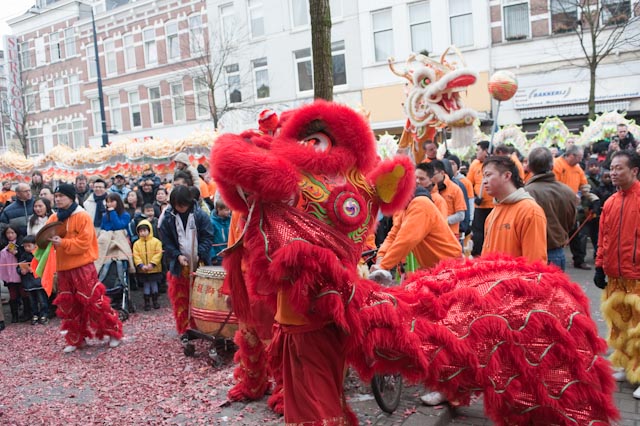
Festivities in Utrecht, Holland
Of course, many of the most important parades and celebrations for Chinese New Year, as one would expect, taking place in China, Hong Kong, Macau, Singapore and Taiwan. Similarly, Losar celebrations take place in Bhutan and Tibet; Tet celebrations in Vietnam, Seol celebrations in Korea and so on.

The emphasis here, though, is to show how widespread observances for the Asian Lunar New Year have become throughout the world and to encourage you to consider attending one of these if you live nearby.


Asian Countries Without Lunar Year Tradition

Malaysia


Celebrants at Penampang, Saba
on the island of Borneo


The Philippines


Manila's Chinese New Year Parade begins in Binondo.
The oldest Chinatown in the world, Binondo was already well established
as a trade center when the Spanish arrived in 1521, and remains
an active center of Filipino Chinese commerce and culture to this day.

Thailand


Nakon Sawon Chinese New Year Parade (left)
The Chinese community has been present in Thailand 
since the Ayutthaya Period (ca. 1350 CE) 


Australia


Chinese New Year festivities in Sydney
include fireworks over the harbor


Canada


Vancouver's Chinese New Year Parade
annually draws over 50,000 spectators
who watch its over 3000 participants
* Toronto, Ontario http://toronto.kijiji.ca/c-community-volunteers-2012-Dragon-Chinese-New-Year-Celebration-W0QQAdIdZ341590534

* Vancouver, British Columbia    http://www.cbavancouver.ca/parade.html


The Netherlands


Rotterdam's Chinese New Year Parade

United Kingdom


Birmingham's activities take place at Arcadian Centre


Chinese New Year Parade at Trafalgar Square, London


United States


The Lunar New Year Parade in Flushing, Queens
is the New York area's largest with
over 4000 people marching annually 
* Flushing, Queens, New York http://queens.about.com/od/flushing/p/Chinese-New-Year.htm (this is actually the largest New York City area  Lunar New Year Parade).

* Houston, Texas   http://lunarnewyearhouston.com/


* Los Angeles, California  http://www.lagoldendragonparade.com/   


* Phoenix, Arizona http://phoenixchineseweek.org/


San Francisco's Chinese New Year Parade
is the largest one outside of Asia.
It is sponsored annually by Southwest Airlines.
* San Francisco, California  (the largest in the USA, with the parade this year on February 11)  http://www.chineseparade.com/   

* San Jose, California (Tet Parade) http://hoitetfairgrounds.org/history.php


* Sonoma County, California (Tet Parade) http://www.sonomavietnamese.org/

* Washington, D.C. http://chineseparadedc.com/  

Washington DC Chinese New Year Parade

Other Countries


The Paris Chinese New Year Parade is one of Europe's largest


CONCLUDING REMARKS

There are undoubtedly many celebrations that I have overlooked here. Please do let me know events that you know about and share them on this blog if you would like to do so before the New Year begins. Also, I will try to include them next year.

Happy Year of the Dragon!


CLIP ART SOURCES


Year of the Dragon around the globe: http://garcya.us/wp-content/uploads/2011/12/preview-91-200x200.jpg

Utrecht Year of the Dragon poster http://crtv.nl/readarticle.php?article_id=970

Celebrants at Penampang, Saba on the island of Borneo: http://www.theborneopost.com/2012/01/08/28-lions-awaken-for-chinese-new-year/

Binondo, Manila parade: http://epicstreet.blogspot.com/2011/02/manila-chinese-new-year-2011.html
Birmingham parade: http://www.cnybirmingham.org.uk/

Sydney Chinese New Year Fireworks: http://1.bp.blogspot.com/_ZbsLP5d7yh0/TU92FKZznNI/AAAAAAAAACM/Vsj5Q6XMYnk/s1600/CNY-Fireworks1.jpg

Rotterdam Parade: http://blog.habitatapartments.com/wp-content/upl/CNY-Rotterdam-2012.jpg

Vancouver Parade: http://vancouver.about.com/od/vancouverevents/p/chinesenewyear.htm

Flushing, Queens parade: http://queens.about.com/od/flushing/p/Chinese-New-Year.htm

Trafalgar Square London parade: http://www.toimg.net/managed/images/10173575/w482/h298/image.jpg

San Francisco Chinese New Year Parade: http://www.san-francisco-hotel-reservations.com/wp-content/uploads/2009/08/san-fran-chinese-new-year-parade.jpg

Washington DC Chinese New Year Parade http://0.tqn.com/d/dc/1/0/l/L/DSC01640.JPG

Paris New Year Parade http://www.bing.com/images/search?q=Paris+Chinese+New+YEar&view=detail&id=FD0CA5B427ABD9225895D6826DFDF0B1C82081C6&first=0&FORM=IDFRIR

Last image Happy New Year: http://www.michiganmartialarts.com/wp-content/uploads/2011/12/HappyNewYear2012-Post.jpg

Saturday, January 14, 2012

One New Year, Many Traditions: Lunar New Year Customs Around The World


Zodiac animals, ivory netsuke, Japan
American Museum of Natural History, New York

This post is one of a series of four posts discussing the Asian Lunar New Year in general and the Year of each year's particular animal. In this post, though, we give the background to Lunar New Year customs around the world.  (Note: This is updated annually).

This post gives background to the importance and influence of the Asian Lunar New Year and the many traditions with which people celebrate the holiday from culture to culture.

One point on terminology is merited here. The Asian Lunar New Year is celebrated by many cultures. Among the largest cultures that celebrate the holiday are the Chinese. For this reason, well-meaning people unfamiliar with the Asian Lunar New Year as a whole may refer to the holiday as the Chinese New Year (CNY). This would, however, be appropriate only when referring to the Lunar New Year as celebrated in China. Using CNY to refer to the whole range of cultures observing the Lunar New Year, though, discounts the millions of non-Chinese celebrations. These include the Mongolian Tsagaan Sar, Korean Seollal, Japanese Oshogatsu, and Bhutanese and Tibetan Losar. all of which are explained below.

CHINESE NEW YEAR

 In China, Taiwan and Singapore, as well as wherever Chinese communities exist abroad, the celebration is correctly called the Chinese New Year.  In cities with large overseas Chinese communities, major celebrations take place.  As a result, festive decoration and parades are annual events in major cities around the  world. Celebrations have long been annual events in many other non-Asian cities throughout the world. In tomorrow's post, I will list links to New Year celebrations around the world.

Some Chinese believe that children should stay up as late as possible on the first day of the New Year, believing that the longer they stay awake, the longer their parents will live. Also, many Chinese will not scold their children on the first day of the New Year, believing that reprimanding them will bring bad fortune to the
children. 

The second day is usually devoted to honoring dead ancestors.  This is particularly important in Confucian tradition.  The third and fourth days often revolve around honoring (or just visiting) in-laws.  The 5th day is called Po Woo, a day in which – unlike the rest of the celebrations – nobody visits anyone else.  Po Woo is the day that people traditionally welcome in wealth.  Visiting others on that day is believed to bring bad luck to both parties.  Other traditions occur on the 6th to 14th days, many of which vary from place to place.  


Finally the last day – the 15th day – is the ending festival called the Lantern Festival.  The Lantern Festival concludes the celebration and occurs on the full moon, and centers around decorating with lanterns and having parades of people carrying lanterns.  Taipei, Taiwan has the largest such display and has become a tourist attraction for the celebration.
Traditional red gift-giving envelopes
Many Chinese spend weeks getting ready for the New Year.  The house is cleaned thoroughly, at least traditionally to clean out any bad luck from the previous year. For others, the good cleaning is simply a way of preparing for the family gathering on the Eve of the New Year.  Doors and windows are often painted red and decorations of red are widespread.  Many people seal the doors and windows on the eve of New Year’s and break the seals open on New Year’s Day to welcome in the New Year. In Chinese tradition, red is a lucky color that for many people is seen as warding off bad luck. For others, the red decorations are simply seen as festive. Traditionally, gifts of money are given to children (and sometimes to unmarried people) in special red envelopes.

The celebration itself is generally celebrated for 15 days, with different events on each.

The 2007 Year of the Dog
Goodwill Dog Circus


On New Year’s Day, large parades take place, usually honoring the animal. Sometimes this has political significance on an international level.  For example, 2007 – as the Year of the Dog-- the government of Japan sent a “dog circus” of performing dogs to China in a move to 
improve relations between the two countries. 

Candied lotus seeds
 Other activities on the first day include setting off firecrackers (to scare off evil spirits or bad luck), wearing new clothes bought for the occasion and eating special holiday foods.  While these foods change from group to group (as Chinese culture is broad and varied), some more widespread foods include eating candied lotus seeds (which brings good luck) and candied coconut (for underscoring family ties and bonding).  Children often are given candied melon (which is thought to ensure healthy growth).

Long noodles are often eaten to represent long life (although it is considered unlucky to cut the noodles in such cases). Because clams are thought to look like gold bullion and gingko nuts are thought to look like silver ingots, these foods are eaten to ensure wealth in the coming year. Oranges or tangerines are usually exchanged among friends.  Many Chinese avoid eating meat on the first day. . In Cantonese-speaking areas, people often eat lettuce wraps since the word for lettuce in Cantonese sounds like the word for rising fortune.


VIETNAMESE TET 

In Vietnam, the holiday is celebrated as Tet.  While Tet usually occurs on the same day as the Chinese New Year, due to slightly different calendar systems, Tet may occur a day after the Chinese New Year.  The last two times this happened was in 1985 and again in 2007 (for those of you who are concerned, we won’t have to worry about the change again until 2030).

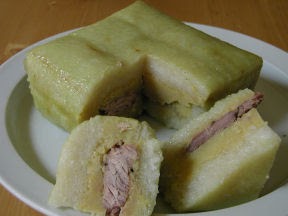
Banh chung

Traditional Tet foods include roasted watermelon seeds, and banh chung and banh tet (sticky rice prepared inside banana leaves).   For instructions on how to you’re your own banh chung and banh tet (including a video with step-by-step instructions), you may wish to go to the Viet World Kitchen site at :


Tet Pole or cay neu


In preparation for Tet, in addition to cleaning their houses, Vietnamese try to pay off all of their debts, so that they will not owe anyone as the New Year starts.  Also, many Vietnamese have a family altar for honoring one’s ancestors.  This altar is traditionally cleaned and new offering placed there on Tet. 


Traditional Tet decorations in one’s house include a decorated cay neu or Tet Pole and small kumquat trees. The first person who visits on Tet is considered an important omen for the coming year.  As a result, people invite someone they think can bring good fortune (for example, a very upbeat friend).  Being invited for this is a high honor.  

TSAGAAN SAR AND BITUUN


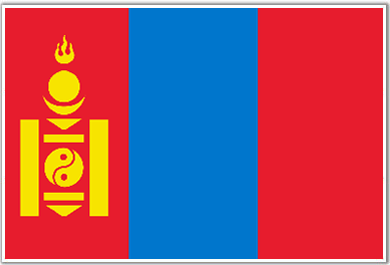
In Mongolia (and in China among the 4.3 million ethnic Mongolian minority), the holiday is celebrated as Tsagaan Sar. 

Mongolians are usually insulted if Tsagaan Sar is called “Chinese New Year.”  This is for two reasons.  First, the Mongolians believe that Tsagaan Sar predates the Chinese celebration, and strongly reject any Chinese influence.  Second, though this is no longer the casw the Communist leadership of China in the 1960’s tried to stamp out the religiously significant holiday among its Mongolian minority, persecuted its practitioners, and unsuccessfully attempted to rename the holiday “Cattle Breeders’ Day.”  This persecution ended with the liberalization of China, but has left very bad feeling not only among those Chinese citizens of Mongolian descent, but throughout the nation of Mongolia as well.

Mongolian buuz

Mongolian airag
Tsangaan Sar is a time of family gatherings and exchanging gifts. While the Chinese avoid meat on the first day of the New Year, the Mongolians do eat meat. Indeed, the most traditional meal of Tsangaan Sar is buuz, which are dumpling filled with beef or mutton. People also have airag, which is fermented mare’s milk.

Palden Lhamo
The celebration of Tsagaan Sar actually begins on the preceding day with Bituun. This is a day of cleaning houses and barns. In Mongolian Buddhist tradition, candles are lit at altars to symbolize the enlightenment of samsara  (the continuous cycle of life and death).  Bituun is also when people make amends with each other and settle disputes from the previous year. Finally, on Bituun,  the Buddhist Dharmapala (protecting, vengeful diety) named Palden Lhamo visits people’s homes. She arrives on horseback and people leave three pieces of ice on their doorsteps to quench its thirst.


TIBETAN AND BHUTANESE LOSAR

In Tibet and Bhutan, the lunar new year holiday is called Losar. Lo means "new" and sar means "year." Losar is also the name used for the holiday among the Sherpa and Tamang people in Nepal and the Bhutia people of the Indian state of Sikkim.


Masked performer in Losar play
In the Buddhist monasteries in Tibet , the day preceding Losar is a sort of winter equivalent to spring cleaning.  The monasteries are cleaned thoroughly, then decorated festively.  Losar itself is an important  religious observance.  Indeed, the last two days of the old year are considered a holiday -- called Gutor -- whose sole purpose is cleaning and other preparation for the first day of Losar. Special rituals are led by the Dalai Lama on Losar itself, followed by lamas, reincarnated monks and secular officials. On the first day of Losar, people traditionally bathe and go to the Temple to pray. Plays are put on in which masked performers enact the conquest of good over evil.

The second day of Losar – called King Losar Day -- is a secular celebration with gatherings of family and friends.  Traditionally, people eat dumplings with scraps of paper or bit of wood in them on which are written fortunes for the coming year.

Many Bhutanese traditionally travel attempt to travel to Tibet if possible.  In Tibet the holiday lasts 15 days; for Tibetan Buddhists in exile in India, the holiday has been shortened to 3 days; while Tibetan Buddhists in North America have customarily reduced the celebration to the first day of Losar only.

KOREAN SEOLLAL


Children wearing han bok at Seol
In Korea, people celebrate the New Year as Seollal (Solnal or Seol).  Customarily people not only clean the house for Seollal, but bathe first thing in the morning to clean themselves as well.  Many Koreans – and especially children --dress in (Solnal or Seol).  Customarily people not only clean the house for Seollal, but bathe first thing in the morning to clean themselves as well.  Many Koreans – and especially children --dress in (Solnal or Seol).  Customarily people not only clean the house for Seollal, but bathe first thing in the morning to clean themselves as well.  Many Koreans – and especially children --dress in ).  Customarily people not only clean the house for Seollal, but bathe first thing in the morning to clean themselves as well.  Many Koreans – and especially children --dress in han bok (the traditional Korean outfit). 


In contrast to the Chinese who use red on their New Year, most Koreans avoid red.  Likewise, where many Chinese avoid meat on the first day, fried meats are a traditional food for Seollal in Korea. That said, arguably the most popular Seollal dish is Duk gook (traditional Korean rice cake soup) for the morning meal. The traditional alcoholic drink called gui balk sul is drunk on Seollal as well; it is believed to make one’s hearing better… and by extension make one more aware during the coming year. In many Korean families, children show various forms of respect to parents and grandparents. For many Koreans, the most important tradition of Seollal is making offerings at the family altar, often including a seh bae or bow to the floor.  The types of offerings and where they are placed on the altar are complex and highly ritualized.

Traditional Seollal altar (left)
Performing seh bae (center)
Duk gook (right)
The game of yut
Seollal is also a time for having fun.  Adults and children often participate in family activities, such as kite flying (yeonnaligi) or playing games together. Throughout the 15 days of celebration, people traditionally play a game called yut (or yutnori) which is a sort of gambling game that uses four sticks (which is unusual in Korea where 4 is in all other things considered an unlucky number).

Also, Seol often includes visits to fortune-tellers for insight into the coming year. The 15th day concludes the celebration with the celebration of Daeboreum.  Unlike China or Vietnam, there are no lanterns involved.  Since Daeboreum occurs on the year’s first full moon, many people consider it important to be the first to see the moon rise.  Some people climb hills or even mountains to be the first to see the moon. 


Yakshik
A widespread custom (and far more common custom than mountain climbing) eating yakshik (a traditional concoction of sesame oil, honey, pinenuts and sticky rice)  One recipe for yakshik is available at the Asian Supper website: 

http://asiansupper.com/recipe/yaksik-sweet-sticky-rice

Finally, eating nuts is traditional, with the custom of cracking them with one’s teeth for the holiday.


JAPANESE OSHOGATSU


Officially, the Japanese do not celebrate the Lunar New Year. In 1873 in the midst of the modernization campaigns of the Meiji Restoration. the Japanese officially moved their traditional Lunar New Year celebration of Oshogatsu from the beginning of the lunar calendar to January 1 of the secular Gregorian calendar.


Joya no kane ceremony
at Shinnyo-do Temple, Kyoto
Nevertheless,  the Japanese continue to mix the old Oshogatsu traditions with the secular New Year and hold to the 12-animal cycle.  At the same time, in many Oshogatsu is still celebrated in rural areas at the beginning of the Lunar New Year. For example, in rural areas of Japan, the joya no kane ritual in which which people ring the great bells in Buddhist Temples 108 times (for eliminating the 108 earthly desires) on the actual Lunar New Year's Day while in the rest of Japan the bell-ringing occurs on New Year's Eve.

Even on the secular New Year, Japanese practice many of the same customs as the rest of Asia. As the Japanese site Family Customs explains:


Like other Asian New Year traditions, adults give money to children on New Year' Day. It is called "otoshi-dama" or the "new year treasure." Children also play various games to usher in the New Year. A popular game is "Furuwarai" which is the American version of pin-the-tail-on-the-donkey. http://familyculture.com/holidays/japanese_new_year.htm   


CONCLUSION

I have likely missed many cultures. Please share yours with me.

As always I welcome your input -- positive and negative -- and I hope
you find this valua
,ble. If you DO like this, please help spread the word and tell others. 


Gung Hay Fat Choy! (Chinese: May prosperity be with you!) 
Saehae bok manhi baduseyo! (Korean: May your receive many New Year's blessings!)
Lo Sar Bey Tashi Delek! (Tibetan: A New Year of prosperity and good will!)
An khang thịnh vượng! (Vietnamese: Security, good health and prosperity!) 


Clip Art Sources

Zodiac animals, ivory netsuke, Japan, American Museum of Natural History, New York


Banh chung: http://www.vietworldkitchen.com/blog/2008/02/tet-sticky-rice-cakes-banh-chung.html

Cay neu Tet pole:  http://v2.lscache6.c.bigcache.googleapis.com/static.panoramio.com/photos/original/32190086.jpg

Mongolian flag: http://www.mapsofworld.com/images/world-countries-flags/mongolia-flag.gif

Mongolian buuz: http://traditionscustoms.com/sites/default/files/buuz_mongolia.jpg

Mongolian airag:  http://upload.wikimedia.org/wikipedia/commons/4/41/Airag_2.JPG

Palden Lhamo: http://en.wikipedia.org/wiki/File:PaldenLhamo.jpg

Masked performer in Losar play: http://www.buddhachannel.tv/portail/spip.php?article11474

Children wearing han bok at Seol: http://bohemiantraveler.com/2011/02/my-korean-lunar-new-year/#

Korean altar, man doing seh bae, and duk gook: "Celebrating Soellal (Lunar New Year) in Korea," Official Site of Korea Tourism: http://english.visitkorea.or.kr/enu/SI/SI_EN_3_6.jsp?cid=941952
The game of yut: http://en.wikipedia.org/wiki/File:Korea_yut_pan.jpg

Yakshik: http://asiansupper.com/files/imagecache/recipe_page/119-yak-shik-sticky-rice-dates-nuts1.jpg

Joya no kane ceremony at Shinnyo-do Temple, Kyoto: http://www.kyotoguide.com/ver2/event/event%20currentevent-.htm