The Autumnal Equinox is a holiday in several traditions. In Wicca, neo-Druidic and neo-Pagan traditions, it is celebrated as Mabon, Alban Elfed or Mea'n Fo'mhair.
In several East Asian Buddhist traditions, the Autumnal equinox is celebrated as the Moon Festival. In Japanese Buddhist tradition, it is celebrated as Shūbun no Hi 秋分の日,one of two Higan (お彼岸), the other being at the Spring Equinox. In Japan it is an official state holiday, but in keeping with the separation of state and religion in Japan, the official name is called Shūbun no hi (お彼岸) or Autumnal Equinox Day. For 2025, Japan observes Shūbun no Hi on Tuesday, September 23.
Several East Asian Buddhist traditions outside of Japan celebrate a Mid-Autumn Festival or Moon Festival. This holiday is related to but separate from the actual Autumnal Equinox. In the Gregorian (secular) calendar, the date of the Mid-Autumnal Festival seems to vary. This is because the holiday comes on the 15th day of the 8th month of the East Asian/Chinese Lunar Calendar. In some years, the Mid-Autumn Festival can actually precede the lunar equinox, as was the case last year, when the Mid-Autumn Festival fell on September 17, 2024. In others years, the holiday can be much later than the actual Autumnal Equinox. This is the case this year when the Mid-Autumn Festival falls on October 6, 2025.
The Mid-Autumn Festival is known as Zōngqiū Jié in Chinese and Tết Trung Thu in Vietnamese and, in a related but different holiday, in Korean as Chuseok (한가위) or "the Eve of Autumn." The holiday may run for three days, either officially or unofficially. The Korean Chuseok always runs three days, and in South Korea is recognized as an official national holiday, this year from October 5-7, 2025. In Hong Kong and Macao, the official public holiday is always the day after the Mid-Autumn Festival, so October 7 for 2025. The reasoning here is that the main observances go into the night, therefore the day after is the best day to recover before returning to work. In the rest of China, the multi-day observance runs for 8 days, combining National Day (October 1) with the Mid-Autumn Festival period (October 6-8). Because the Moon Festival aligns with National Day, China has made this into a "Golden Week" from October 1-8, 2025.
While this is a significant holiday for all of these faiths, it is not a day that would normally require the absence from class or work of faculty, staff or students. That said, those asking for accommodation should be allowed.
WICCAN, NEO-DRUIDIC AND NEO-PAGAN TRADITIONS
In neo-Druidic, neo-Pagan and Wiccan traditions, the Autumnal Equinox is viewed as a Major Sabbath. In all of these traditions, the holiday is celebrated as a harvest festival and as a time to recognize the balance in all things.
 |
| A Wiccan Mabon altar |
MEA'N FO'MHAIR
 |
| Green Man of the Forest |
ALBAN ELFED
In other neo-Pagan traditions (and notably in the Welsh tradition), the holiday has been known for centuries as Alban Elfed or the “Light of the Sun.” In this tradition, the same sort of offerings are proffered but to “The Lady” who is also called the “Spirit of the Land.”
MABON
In Wicca and neo-Pagan traditions the Autumnal Equinox is known as Mabon. This is one of the four Major Sabbats in the eight points of the Wheel of the Year. Mabon marks the time at which day and night are in total balance, and is accompanied by personal efforts of members of these faith to find a similar balance in their lives.
 Mabon is primarily a Wiccan name for the Autumnal Equinox. Other names used by Wiccans and others include the Harvest Moon or the Harvest Home.
Unlike the ancient names of Mea'n Fo'mhair and Alban Elfed, the Wiccan version of the holiday has been called Mabon only since the latter half of the 20th Century. Unlike many other Wiccan holidays, no corresponding name exists in ancient pagan traditions. Instead, the name was coined by the US Wiccan leader Aidan Kelley soon after the formation in 1967 of the NROOGD (New Reformed Orthodox Order of the Golden Dawn), one of the most important popularizers of the Wiccan faith.Kelley’s adoption of the name Mabon was to honor the early Welsh pagan divine son deity Mabon fab Mellt.
In Wicca and neo-Pagan traditions the Autumnal Equinox is known as Mabon. This is one of the four Major Sabbats in the eight points of the Wheel of the Year. Mabon marks the time at which day and night are in total balance, and is accompanied by personal efforts of members of these faith to find a similar balance in their lives.
 Mabon is primarily a Wiccan name for the Autumnal Equinox. Other names used by Wiccans and others include the Harvest Moon or the Harvest Home.
 Unlike the ancient names of Mea'n Fo'mhair and Alban Elfed, the Wiccan version of the holiday has been called Mabon only since the latter half of the 20th Century. Unlike many other Wiccan holidays, no corresponding name exists in ancient pagan traditions. Instead, the name was coined by the US Wiccan leader Aidan Kelley soon after the formation in 1967 of the NROOGD (New Reformed Orthodox Order of the Golden Dawn), one of the most important popularizers of the Wiccan faith.Kelley’s adoption of the name Mabon was to honor the early Welsh pagan divine son deity Mabon fab Mellt.
CELEBRATION PRACTICES
Both in ancient Druidic tradition and in modern neo-Druidic, pagan and Wiccan practice, offerings are often proffered in a horn of plenty called a cornucopia. As a result, Cornucopia is another name some practitioners use for the holiday.
In Wicca, the holiday recognizes balance in all things. Mabon altars are set with symbols of balance as well as the autumn harvest.
It should be noted that while the name Mabon has been growing in popularity in the UK and Ireland, many neo-Druids strongly oppose the term as a neologism. As a result, while it would be appropriate to wish a Wiccan a “Happy Mabon,” this may not be as appreciated for some neo-Druids and modern pagans.
In Wicca, the holiday recognizes balance in all things. Mabon altars are set with symbols of balance as well as the autumn harvest.
It should be noted that while the name Mabon has been growing in popularity in the UK and Ireland, many neo-Druids strongly oppose the term as a neologism. As a result, while it would be appropriate to wish a Wiccan a “Happy Mabon,” this may not be as appreciated for some neo-Druids and modern pagans.
RELATIONSHIP TO CHRISTIANITY'S MICHAELMAS
When Christianity first spread in the Celtic regions, the Roman Catholic Church attempted to syncretize existing pagan practices by co-opting the celebration of the Autumnal Equinox with a Christian overlay.
 |
| Archangel Michael trampling Satan by Guido Reni (1636) |
To this end, the Church placed great emphasis on Michaelmas which, falling on September 29, came near the same time. In this co-opting Catholic tradition, the Archangel Michael came to represent the power of light over darkness, an important attribute as the length of daylight began to shorten.
Today, religious services honoring the Archangel Michael are still practiced in some Roman Catholic, Episcopalian and Lutheran congregations, especially in the United Kingdom. A folk custom still in evidence in the parts of the British Isles warns that it is unlucky to harvest blackberries after Michaelmas, as they have been cursed at that time by Lucifer.This custom that it is unlucky to harvest in the woods most likely has its origin in the woodland offerings of the autumnal harvest in pre-Christian Britain described above.
EAST ASIAN TRADITIONS
In Japanese, Chinese and Vietnamese Buddhist traditions, the Autumnal Equinox is celebrated as a significant festival, centered on the moon. It is sometimes called the Moon Festival as a result. In all of these cultures, while the origins may have grown out of Buddhism, the observance no longer remains tied only to Buddhists.
In Korea, the holiday Chuseok occurs at the same time but has different origins, and is independent of direct association to Buddhism.
Shūbun no Hi -- Higan
Higan is the Japanese celebration of the equinoxes. Higan is celebrated at both the Autumnal Equinox and the Vernal (Spring) Equinox. On both days, the holiday is an official public holiday in Japan. Buddhists of all major sects in Japan observe Higan. The Autumnal Equinox is Shūbun no Hi.
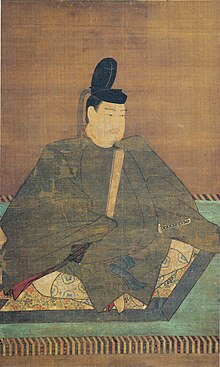
The holiday has its origins with the institution of worship on that day by the 8th Century Japanese Emperor Shomu. The first official records of its celebration date to the year 806 CE when the government of Japan required all priests in Kokubun-ji temples to recite the Diamond Sutra at the Autumnal Equinox. Higan is also traditionally one of the days for the beginning of pilgrimages among the country's temples by the devout.
 |
| Emperor Shomu |
Higan in Japanese literally means "the Other Shore." The term can refer to crossing to the other shore from the material world (i.e., to Enlightenment). The term can also refer to the transitory nature of the the material world (as all things are impermanent and must die, thus crossing to the other shore).
In Japan, Higan is traditionally a day for honoring the graves of the dead. The Guide to Japanese Buddhism of the Japanese Buddhist Federation explains:
During this period, it is customary for Buddhists throughout the country to visit temples and graves. They bring flowers, incense, water or their favorite food to be offered to the deceased and greet them with refreshed minds to report on their well-being.
Traditionally, Japanese Buddhists decorate the graves with the red spider lilies (lycoris radiata) whose Japanese name higanbana literally means "Higanflower."

Japanese higanbana
VIETNAMESE AND CHINESE MOON FESTIVAL
The Autumnal Equinox is celebrated as the Mid-Autumn Festival in Chinese and Vietnamese traditions. In both countries, the holiday is an official day off. Also in both cultures, the holiday dates back thousands of years. In 2025, the holiday comes on October 6, after the true Autumnal equinox.
 |
| Vietnamese Moon Festival Lion Dancers |
Tết Trung Thu is the second most important in the year after Tet. Despite this, Vietnam does not officially observe this as a national holiday (although its observance is widespread).
In both Vietnam and China the holiday is particularly marked by the traditional Lion Dance with lion dancers going door to door asking to dance. These are often performed by children (especially in Vietnam) although professional lion dancers are a part of main events.
In China, the holiday is known as Zōngqiū Jié. In Chinese tradition, the holiday has its origins in the tale of the mythical Chang-E who ate her husband's dangerous elixir to save him, and flew to the moon as a consequence where she became the moon goddess. As with Vietnamese traditions, the Moon Festival is tied to the Fall Harvest.
While the origins of the Chinese Moon Festival predates historical records, the first known observances go back to at least the Zhou Dynasty (1046-256 BCE).
In many Han Chinese traditions, sacrifices are made to the moon. In many Chinese ethnic minorities, unique customs are practiced. For example, among the Dong people, there is a custom of "stealing" harvested vegetables and fruit (this is, however, only symbolically stolen as these are set out for the purpose). The Bouyei people worship the Moon Grandmother, and bring rice cakes to her shrine. The Maonan people put incense in a hanging grapefruit, to represent the moon. Finally, in some Mongolian traditions, there are practices centered on chasing the moon.
.jpg) |
| Chang-E's flight to the moon |
While the origins of the Chinese Moon Festival predates historical records, the first known observances go back to at least the Zhou Dynasty (1046-256 BCE).
In many Han Chinese traditions, sacrifices are made to the moon. In many Chinese ethnic minorities, unique customs are practiced. For example, among the Dong people, there is a custom of "stealing" harvested vegetables and fruit (this is, however, only symbolically stolen as these are set out for the purpose). The Bouyei people worship the Moon Grandmother, and bring rice cakes to her shrine. The Maonan people put incense in a hanging grapefruit, to represent the moon. Finally, in some Mongolian traditions, there are practices centered on chasing the moon.
In all traditions, the festival celebrates the autumnal harvest. As the name Moon-Cake Festival suggests, it is customary to eat Moon Cakes at this time.
In Vietnam, Moon Cakes are called banh trung thu and are made up of ground beans, lotus and egg yolks. These are sold at street corners throughout Vietnam and made at home as well. A recipe for banh trung thu can be found on the Viet World Kitchen site at:
http://www.vietworldkitchen.com/blog/2009/10/how-to-make-moon-cakes-banh-trung-thu.html
 |
| Vietnamese Banh trung thu |
http://www.vietworldkitchen.com/blog/2009/10/how-to-make-moon-cakes-banh-trung-thu.html
CHUSEOK
For Koreans, Chuseok is a major holiday. The holiday is celebrated much like the US Thanksgiving, with family gatherings and large meals. The holiday, however, has a more Confucianist aspect as well centered on three traditions: Charye (차레), Beolcho (벌초), and Seongmyo (성묘).
For Koreans, Chuseok is a major holiday. The holiday is celebrated much like the US Thanksgiving, with family gatherings and large meals. The holiday, however, has a more Confucianist aspect as well centered on three traditions: Charye (차레), Beolcho (벌초), and Seongmyo (성묘).
Charye involves eating special foods that are set on one table for one's dead ancestors (called a Charyesang) and on another table for the living descendants who have gathered for the festival.
Traditionally, Koreans bow twice toward the table of the dead and once toward the elders among the living. This is no ordinary bow, though, but rather one in which those bowing kneel and then place their foreheads on the ground. Generally during Charye, people choose a specific deceased ancestor to whom to pay particular respect. People write the name of the ancestor on a piece of special paper and burn it. After this, the window is opened for the spirits of the ancestors to join them.
 |
| Charyesang |
Traditionally, Koreans bow twice toward the table of the dead and once toward the elders among the living. This is no ordinary bow, though, but rather one in which those bowing kneel and then place their foreheads on the ground. Generally during Charye, people choose a specific deceased ancestor to whom to pay particular respect. People write the name of the ancestor on a piece of special paper and burn it. After this, the window is opened for the spirits of the ancestors to join them.
The other two traditions take place at the graves of one's ancestors. Beolcho comes the day before Charye, and involves grass trimming, grave cleaning and clearing away of leaves or dirt. The day after Charye is when Seongmyo takes place. This involves bowing to the cleaned grave sites and honoring one's ancestors.
CONCLUSION
As always in these write-ups, I welcome your feedback. This in no way endorses one practice or another. It is merely meant to be informational.
Please feel free to send me corrections or things you would like me to include next time (and feel equally free to let me know if you find these worthwhile).
May you have a balance in your life on this Autumnal Equinox and a happy Moon Festival!
WANT TO READ MORE?
On Wiccan, neo-Pagan and neo-Druidic traditions:
Crystal Links, "Autumn Equinox -- Mabon": http://www.crystalinks.com/autumn.html
Mabon 2023: A Witch's Guide to Embracing and Celebrating the Harvest," Moonfall Metaphysics, https://www.moonfallmetaphysical.com/s/stories/mabon-2023
Mystic Familiar, "Alban Elfed -- Autumn Equinox": http://www.mysticfamiliar.com/library/witchcraft/alban_lfed.html
Sagento A, Spell Research, "A Mabon Outline": http://spellresearch.com/spellbook/1993/10/12/a-mabon-outline.html
Wicca Chat, "Mabon": http://www.wicca-chat.com/witch_sabats/mabon.htm
Wiggington, Patti, About.com -- Paganism/Wicca, "All About Mabon, the Autumn Equinox": http://paganwiccan.about.com/od/mabontheautumnequinox/a/AllAboutMabon.htm
Sagento A, Spell Research, "A Mabon Outline": http://spellresearch.com/spellbook/1993/10/12/a-mabon-outline.html
Wicca Chat, "Mabon": http://www.wicca-chat.com/witch_sabats/mabon.htm
Wiggington, Patti, About.com -- Paganism/Wicca, "All About Mabon, the Autumn Equinox": http://paganwiccan.about.com/od/mabontheautumnequinox/a/AllAboutMabon.htm
On Higan
Japanese Buddhist Federation, Guide to Japanese Buddhism, "Major Japanese Buddhist Festivals":http://www.buddhanet.net/nippon/nippon_partII.html
Zenku Smyers, Zen Buddhist Temple of Chicago, "The Other Shore": http://www.zbtc.org/downloads/zenku-othershore.html
Time and Date, "September Equinox Customs": http://www.timeanddate.com/calendar/september-equinox-customs.html
On the Moon Festival
China Culture, About.com, "The Moon Festival": http://chineseculture.about.com/library/weekly/aa093097.htm
Michael Tartaski, Holidaysia, "Tet Trung Thu 2013 – Vietnam’s Mid-Autumn Festival": http://www.holidaysia.com/events/tet-trung-thu/
Passion Vietnam, "Full Moon (Mid-Autumn) Festival": http://www.passionvietnamtravel.com/en/nord-du-viet-nam/full-moon-mid-autumn-festival.html
Travel China Guide, "Mid-Autumn Festivals": http://www.travelchinaguide.com/essential/holidays/mid-autumn.htm
Fang Yang, Xinhua News Agency, "The Mid-Autumn Festival and Its Traditions": http://news.xinhuanet.com/english2010/culture/2011-09/12/c_131134150.htm
On Chuseok
Chuseok.org, "Chuseok 2020", https://www.chuseok.info/customs/
Imagine Your Korea, "Traditional Korean Holiday of Bountiful Harvest, Chuseok," https://english.visitkorea.or.kr/enu/ATR/SI_EN_3_6.jsp?cid=811650
CLIP ART SOURCES
Autumn equinox opening clip art: http://www.examiner.com/images/blog/EXID22753/images/AutumnEquinox.jpg
A Wiccan Mabon altar: http://paganwiccan.about.com/od/mabontheautumnequinox/p/MabonAltarDecs.htm
Green Man of the Forest: http://salemsmoon.files.wordpress.com/2013/09/greenman1_thumb.jpg?w=198&h=205
Mabon blessings: http://www.owlsdaughter.com/wp-content/uploads/2010/09/Mabon_Blessings_by_FullMoonArtists.jpg
Guido Reni's Archangel Michael Trampling Satan: http://en.wikipedia.org/wiki/File:Guido_Reni_031.jpg
Emperor Shomu: http://upload.wikimedia.org/wikipedia/commons/thumb/3/3f/Emperor_Shomu.jpg/220px-Emperor_Shomu.jpg
Japanese Higanbana: https://en.wikipedia.org/wiki/Lycoris_radiata
Vietnamese Moon Festival Lion Dancers: http://www.passionvietnamtravel.com/en/nord-du-viet-nam/full-moon-mid-autumn-festival.html
Chang-E's Flight to the Moon: http://upload.wikimedia.org/wikipedia/commons/b/b3/The_Moon_Goddess_of_Chang%27e_%28Shi_Yu%29.jpg
Vietnamese banh trung thu :http://www.vietworldkitchen.com/blog/2009/10/how-to-make-moon-cakes-banh-trung-thu.html