|
| Seattle's Year of the Horse Festival |
Today’s post first indicates where the Lunar New Year is an official state holiday. The post then goes on to share the wide range of events taking place outside of those countries. The listing here gives 145 major celebrations (parades, galas or other celebrations) for the Year of the Horse in 26 countries beyond where it is officially part of the tradition. Of these, 55 are in the United States, 23 in Canada, 18 in the United Kingdom, 13 in Australia, and 8 in France with the others spread across the globe.
That said, you may also be interested in reading three related posts on
1) Lunar New Year Customs around the world at
http://davidvictorvector.blogspot.com/2013/01/lunar-new-year-celebrations-around.html
2) Year of the Horse: Some Background with the specifics for the character traits of those born in the Year of the Horse in general and specifics for 2014 as the Year of the Wooden Horse in particular. You can rad this at http://davidvictorvector.blogspot.com/2014/01/year-of-horse-some-background.html
and
3) Year of the Horse: Business Impact at http://davidvictorvector.blogspot.com/2014/01/year-of-horse-business-impact.html
A TIME OF SLOW DOWNS AND TIME OFFS
The Asian Lunar New Year is a public holiday with varying lengths in several countries.
Many Chinese, Korean, Vietnamese, Bhutanese and Mongolian communities unofficially are closed for the entire New Year’s week (including the preceding or following weekends in many cases). The dates of observance for Tet in Vietnam and Seol in Korea may extend well beyond the official dates as well, especially in rural areas. This somewhat parallels the slowing or shutting down of work and school for Christmas in Europe,Australia , New Zealand and the Americas
Many Chinese, Korean, Vietnamese, Bhutanese and Mongolian communities unofficially are closed for the entire New Year’s week (including the preceding or following weekends in many cases). The dates of observance for Tet in Vietnam and Seol in Korea may extend well beyond the official dates as well, especially in rural areas. This somewhat parallels the slowing or shutting down of work and school for Christmas in Europe,
OFFICIAL STATE HOLIDAYS
The Asian New Year in various countries is officially recognized by the state in 15 countries, as follows:
 |
| Bhutan |
Bhutan: Officially off for Losar but the dates are not officially specified. As some festivities last up to 15 days, this means that the time when things are open or closed is somewhat unclear for about two weeks.
 |
| Brunei |
Brunei: The first Day of Lunar New Year is an official holiday. If that date lands on a Friday (the Islamic day off), the official observance is moved to the next day on Saturday. It is significant that the Chinese and Vietnamese in Brunei are only a minority, but the state still recognizes the first day of the Asian New Year as a sign of respect to an important minority population.
 |
| Christmas Island |
Christmas Island: Christmas Island is a territory of Australia, and not a full country. Still, since (unlike Australia), the territory recognizes the first two days of the Lunar New Year as an official holiday, it is listed here. If the holiday falls on a Sunday (the Christian day off), it is extended until the following Tuesday.
 |
| Hong Kong |
Hong Kong: Though technically part of the PRC, Hong Kong has considerable autonomous control. The first three days of the Chinese New Year are official holidays. This is one day longer than on the Mainland.
 |
| Indonesia |
Indonesia: The first day of the Lunar New Year is a holiday. It is significant that the Chinese and Vietnamese in Indonesia are only a minority, but the state still recognizes the first day of the Asian New Year as a sign of respect to an important minority population.
 |
| Macau |
 |
| Malaysia |
Malaysia: The Chinese are Malaysia's largest minority and a major part of the overall society. As a sign of respect to that minority, Malaysia recognizes the first two days of Lunar New Year as official holidays.

Mongolia: Bituun (New Year's Eve) and first three days of Tsagaan Sar are official holidays.
 |
| Mongolia |
 |
| North Korea |
North Korea: The first day of Seol is an official holiday.
 |
| The Philippines |
The Philippines: The first day of the Lunar New Year is a holiday, although the Chinese community is a minority within the country.
 |
| PRC |
People's Republic of China: New Year’s Eve and the first two days of the New Year are holidays in the PRC. That said, the government usually officially makes the New Year a seven-day holiday. By doing so, the Chinese may have the days off but are then required to work during either the preceding or following weekend (or another weekend if agreed upon). Businesses and schools, in turn, consider the two weekend days as being the weekdays that were missed. While this clarifies issues such as overtime pay or extra school days, this nonetheless makes predicting when something is actually shut down or open very difficult at this time of year.
Note also that Hong Kong, Macau and Tibet all are part of the PRC but have different Lunar New Year official times off (as noted elsewhere in this list).
 |
| Taiwan |
Taiwan: In Taiwan the Lunar New Year’s Eve and the first three days of the Chinese New Year are official days off. Additionally, the fifth day of the Chinese New Year is an official day off for the Dragon Boat Festival (or Duan Wu Festival). This effectively makes the fourth day of the New Year an unofficial day off.
 |
| Tibet |
Tibet: Although Tibet is part of the PRC, Losar is officially recognized as a holiday for the first seven days of the Lunar New Year. This is done as a recognition of the cultural traditions of the Tibetan ethnic minority.
 |
| Singapore |
Singapore: Singapore recognizes the first two days of the Lunar New Year as official days off. Approximately 74% of Singapore's population is Chinese in ethnicity.
 |
| South Korea |
South Korea: The first three days of Seol are officially recognized as a state holiday.
 |
| Vietnam |
Vietnam: The last two days of old year and first three days of Tet are officially recognized as state holidays.
Year of the Horse Celebrations Around the Globe
Of course, many of the most important parades and celebrations for Chinese New Year, as one would expect, taking place in China , Hong Kong, Macau , Singapore and Taiwan Bhutan and Tibet ; Tet celebrations in Vietnam , Seol celebrations in Korea
The emphasis here, though, is to show how widespread observances for the Asian Lunar New Year have become throughout the world and to encourage you to consider attending one of these if you live nearby.
Asian Countries Without Lunar Year Tradition
* Kuala Lumpur http://www.malaysiasite.nl/chingay.htm
* Kuching City, Sarawak http://www.theborneopost.com/2013/11/26/crowning-miss-cheongsam-malaysia-for-24th-year/
* Penampang, Saba http://www.theborneopost.com/2012/01/08/28-lions-awaken-for-chinese-new-year/
* Shah Alam http://www.nv-asia.com/2014/01/02/2014-chinese-new-year-for-year-of-horse/
* Shah Alam http://www.nv-asia.com/2014/01/02/2014-chinese-new-year-for-year-of-horse/
 |
| Celebrants at Penampang, Saba on the island of Borneo |
The Philippines
* Davao City http://www.davaotourism.com/home/cityupdates/viewArticle/Chinese%20New%20Year%202014&currpage=1&SubCat=&subPage=news
 |
| Manila's Chinese New Year Parade begins in Binondo. The oldest Chinatown in the world, Binondo was already well established as a trade center when the Spanish arrived in 1521, and remains an active center of Filipino Chinese commerce and culture to this day. |
Thailand
* Bangkok
 |
Nakon Sawon Chinese New Year Parade (left)
The Chinese community has been present in Thailand
since the Ayutthaya Period (ca. 1350 CE)
Lunar New Year Celebrations Elsewhere
* Brisbane, Queensland http://www.chinesenewyear.com.au/bris_locations.html
* Bundaberg, Queensland http://bundabergregionevents.com.au/events/chinese-new-year-celebrations
* Cairns, Queensland http://www.eventsqld.com.au/queensland-event-calendar/details/2734-cairns-chinese-new-year-2014
* Canberra, ACT http://www.visitcanberra.com.au/Events/Festivals-and-celebrations/Event-Details-Page.aspx?ID=9006265&Title=Lantern+Festival+2014
* Gladstone, Queensland http://gladstonecareercentre.wordpress.com/2013/11/21/volunteer-at-the-chinese-new-year-of-the-horse-2014-at-international-village/
* Gold Coast (Surfer's Paradise), Queensland : http://www.chinesenewyear.com.au/gc_locations.html
* Hamilton Island, Queensland http://eventsonthehorizon.com/event/chinese-new-year-hamilton-island-2014/
* Hobart, Tasmania http://www.chinesenewyear.com.au/hobart_home.html
* Melbourne, Victoria http://www.onlymelbourne.com.au/melbourne_details.php?id=61649#.UtDu5tJDvTo
* Perth, Western Australia
* Sydney, New South Wales
* Townsville, Queensland http://www.meetup.com/Townsville-Foodies-Meetup-Group/events/155490652/
* Townsville, Queensland http://www.meetup.com/Townsville-Foodies-Meetup-Group/events/155490652/
 |
| Chinese New Year festivities in Sydney include fireworks over the harbor |
* Calgary , Alberta
* Edmonton, Alberta http://www.shareedmonton.ca/events/2014/01/31/chinese-new-year/photos
* Fort Erie (Niagara Falls), Ontario: http://www.bulletnewsniagara.ca/2013/11/29/could-year-of-the-horse-festival-provide-fort-erie-race-track-with-a-new-lease-on-life/
* Grand Prairie, Alberta http://grandeprairie.kijiji.ca/c-community-activities-groups-Chinese-New-Year-Celebration-W0QQAdIdZ555213403
* Hamilton, Ontario http://theheartofontario.com/calendar/events/view/1183/events-calendar#.UtMsmPuenSg
* Kamloops (Sun Peaks Resort), British Columbia http://www.sunpeaksresort.com/events-and-festivals/event.aspx?c=1&e=2027
* Kelowna, British Columbia http://www.kelownaevents.info/index.php?option=events&main_id=26394
* Kingston, Ontario https://sites.google.com/site/kingstonchinesecanadian/
* Markham, Ontario http://www.clubmtoronto.com/16-news/66-club-m-mauritius-chinese-association-chinese-new-year-celebration-2014
* Moncton, New Brunswick http://www.gmcca.ca/
* Montreal , Quebec
* Nanaimo, British Columbia http://www.harbourliving.ca/event/chinese-new-year-robbie-burns-celebration/2014-01-18/?pid=d19c7ea390a163d1763316e3652d4492
* Ottawa, Ontario http://www.ottawacommunitynews.com/news-story/4296823-renfrew-mercury-ring-in-the-chinese-new-year-feb-2-event-to-take-place-at-city-s-newest-rec-centre/
* Prince George, British Columbia http://tourismpg.com/events/chinese-new-year-0
* Quebec City, Quebec http://www.grandtheatre.qc.ca/spectacles/carnaval-2014-gala-du-printemps-chinois-1574.html
* Richmond, British Columbia http://www.tourismrichmond.com/events/cny/
* Saint John, New Brunswick http://www.ccasj.org/
* Toronto , Ontario http://toronto.hkcba.com/February_8th_2014_-_30th_Annual_Chinese_New_Year_Ball.html
* Prince George, British Columbia http://tourismpg.com/events/chinese-new-year-0
* Quebec City, Quebec http://www.grandtheatre.qc.ca/spectacles/carnaval-2014-gala-du-printemps-chinois-1574.html
* Richmond, British Columbia http://www.tourismrichmond.com/events/cny/
 |
| Vancouver's Chinese New Year Parade annually draws over 50,000 spectators who watch its over 3000 participants |
*
* Victoria, British Columbia http://www.tourismvictoria.com/includes/events/Chinese-New-Year-Celebration-and-Lion-Dance/3319/
* Waterloo, Ontario http://coccc.net/coccc-presents-the-chinese-lunar-new-year-festival-and-gala-2014/
* Whitehorse, Yukon http://www.whitehorse.vic.gov.au/Chinese-New-Year-Festival.html
* Winnipeg, Manitoba http://central.canada.taoist.org/content/newsitem_ca_central.asp?name=Canada-Central-Winnipeg-2014-02-01-CNYB
France
* Clermont-Ferrand http://www.bboxclub.com/2014/01/30/jeudi-30-janvier-2014-soiree-etudiante-overbox-nouvel-an-chinois-du-cheval-2014-entree-gratuite-navettes-gratuites-bouteilles-a-65e-toute-la-nuit/
* Lyon http://www.en.lyon-france.com/en/Things-to-do/List-of-Events/Entertainment-Leisure/Carnival/Nouvel-An-Chinois
* Montpellier http://www.toutmontpellier.fr/tag/Nouvel%20an%20chinois%20Montpellier
* Noisy-la-Grande http://www.noisylegrand-tourisme.fr/sortir-se-detendre-se-cultiver/sortir/les-animations/le-nouvel-an-chinois.html
* Sainte-Etienne http://www.chine-informations.com/evenement/nouvel-an-chinois-a-saint-etienne-du-rouvray_496.html
* Strasbourg http://www.chineseinstitute.fr/la-chine-aujourdhui/le-nouvel-an-chinois-fete-a-strasbourg/
 |
| The Paris Chinese New Year Parade is one of Europe's largest |
The
* Amsterdam
 |
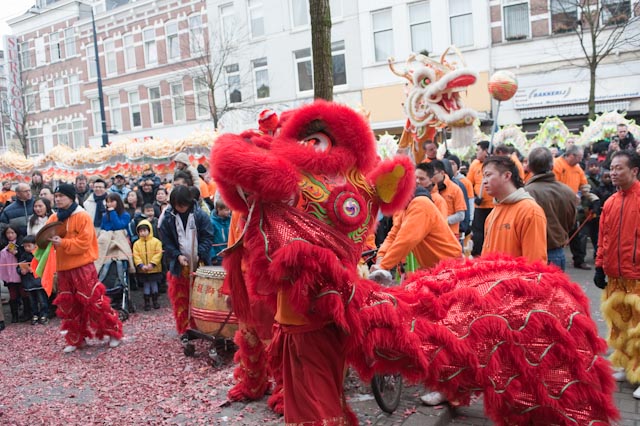
| Rotterdam's Chinese New Year Parade |
* Christchurch, New Zealand http://www.eventfinder.co.nz/2014/chinese-new-year-lantern-festival/christchurch-city
 |
| Wellington, New Zealand's Chinese New Year celebration |
* Aberystwyth, Wales: http://www.nanteos.com/events.php
* Bristol England http://visitbristol.co.uk/things-to-do/chinese-new-year-at-bristol-museum-and-art-gallery-p1487773
* Cambridge, England http://www.list.co.uk/event/20400532-chinese-new-year-gala/
* Cardiff , Wales http://www.educationgroup.co.uk/workshops/chinese-new-year
* Ipswich, England http://www.wolseytheatre.co.uk/shows/chinesenewyear/
* Lancaster, England http://www.thelancashiremagazine.co.uk/events/chinese-new-year-2014/
* Leeds, England http://www.networkleeds.com/Articles/386417/Network_Leeds/Job_Opps/Voluntary_Opps/Chinese_New_Year.aspx
* Liverpool , England
 |
| Chinese New Year Parade at Trafalgar Square, London |
* London , England
* Manchester , England
* Medway , Kent , England
* Newcastle , England
* Nottingham , England
* Plymouth, England http://www.plymouth.ac.uk/pages/dynamic.asp?page=events&eventID=8433&showEvent=1
* Plymouth, England http://www.plymouth.ac.uk/pages/dynamic.asp?page=events&eventID=8433&showEvent=1
* Sheffield , England
* Swansea, Wales http://www.wherecanwego.com/event/755077-chinese-new-year-celebration/events.aspx
* Swansea, Wales http://www.wherecanwego.com/event/755077-chinese-new-year-celebration/events.aspx
* Aberdeen, South Dakota http://www.aberdeencentre.com/en/14_cny.php
* Albany, New York http://www.solanoavenueassn.org/lunar-new-year.html
* Atlanta, Georgia http://gasiantimes.com/event/2014-atlanta-chinese-lunar-new-year-festival/
* Austin, Texas (Tet) http://www.vacat.org/
* Birmingham, Alabama http://www.bhmchinesefestival.org/
* Boston
* Albany, New York http://www.solanoavenueassn.org/lunar-new-year.html
* Atlanta, Georgia http://gasiantimes.com/event/2014-atlanta-chinese-lunar-new-year-festival/
* Chicago , Illinois http://chicagochinatown.org/event/year-horse-4712/
* Cincinnati, Ohio http://events.local12.com/2014_Chinese_New_Year_Gala/286007253.html
* Cleveland, Ohio http://www.yelp.com/events/cleveland-lunar-new-year-celebration-at-asian-town-center
* Colorado Springs, Colorado http://www.cscci.org/
* Denver, Colorado http://events.post-gazette.com/denver_co/events/show/368997747-2014-annual-colorado-chinese-new-year-celebration
* Des Moines (Waukee), Iowa http://www.iowachinese.org/events/2014newyear.html
* Detroit, Michigan https://www.dcba.com/events/chinese-new-year-gala-2014/
* Flushing, Queens, New York
 |
| The Lunar New Year Parade in Flushing, Queens is the New York area's largest with over 4000 people marching annually |
* Fort Myers, Florida http://www.fox4now.com/events/227088891.html
* Fresno, California https://www.facebook.com/events/210996329085611/?ref=22
* Grand Prairie, Texas (Tet) http://tradersvillage.com/grand-prairie/events/lunar-new-year-tet-in-dfw-festival
* Hilo, Hawaii http://www.gohawaii.com/big-island/events/imported/2013/10/03BFD974-AA67-A6A6-AA08C3D3060A2692
* Honolulu, Hawaii http://travelwithkids.about.com/gi/o.htm?zi=1/XJ&zTi=1&sdn=travelwithkids&cdn=travel&tm=11&gps=349_477_1276_823&f=00&su=p1097.8.121.ip_p284.12.336.ip_p531.54.336.ip_&tt=6&bt=1&bts=0&st=10&zu=http%3A//www.chinatownhi.com/
* Houston , Texas
* Indianapolis, Indiana http://www.indy-chinese.com/
* Irvine, California http://events.ocregister.com/irvine_ca/events/show/368974383-2014-chinese-new-year-celebration-performance
* Jacksonville, Florida (Tet) http://vietnamesenewyears.wix.com/jacksonville#!parties/c22j2
* Lansing, Michigan http://greaterlansingchinese.org/2013/12/13/announcement-on-2014-chinese-new-year-celebration/
* Las Vegas , Nevada
* Lexington, Kentucky
* Los Angeles , California (Chinese)
* Los Angeles, California (Tet) http://www.latetfest.net/?page_id=25
* Los Angeles, California (Tet) http://www.latetfest.net/?page_id=25
* Modesto, California http://modesto.findandgoseek.net/listing/chinese-new-year-celebration/fairs-festivals/02/11/2012
* Montery Park, California http://sgvjournal.com/monterey-park/2031-montrey-park-okays-chinese-new-year-event-for-jan-56-26-2014.html
* Nashville, Tennessee http://www.chineseartsalliance.org/category/tags/chinese-new-year
* New York , New York
* Philadelphia, Pennsylvania http://www.ticketfly.com/event/441603-14th-annual-lunar-new-year-philadelphia/
* Phoenix , Arizona
* Pittsburgh, Pennsylvania http://www.ocapghpa.org/lunarnewyear2014/index.html
* Plano, Texas http://listings.dallasnews.com/dallas_tx/events/chinese+new+year+in+plano
* Portland , Oregon
* Richmond, California http://www.ci.richmond.ca.us/DocumentCenter/View/27868
* Riverside, California: http://lunarfestriverside.com/
* Sacramento, California http://www.cnyca.net/
* Saint Louis, Missouri http://www.wac-stl.org/content/23rd-annual-chinese-new-year-celebration
* San Antonio , Texas
*San Diego , California (Chinese Festival) http://sdcny.weebly.com/
* San Diego (Tet Festival) http://www.sdtet.com/
*
* San Diego (Tet Festival) http://www.sdtet.com/
 |
| San Francisco's Chinese New Year Parade is the largest one outside of Asia. It is sponsored annually by Southwest Airlines. |
* San Jose , California
*Seattle ,Washington http://www.cidbia.org/events/2014-lunar-new-year/lunar-new-year-celebration-2014-year-of-the-horse
* Sonoma County , California
* Spokane, Washington http://www.spokanechinese.org/events-2796321160.html
* Spokane, Washington http://www.spokanechinese.org/events-2796321160.html
* Stockton, California http://www.stocktoncnyc.org/
* Tucson, Arizona http://www.tucsonlifestyle.com/events/2014/02/01/festival/chinese-new-year-festival-2014/
* Westchester, New York http://www.findfestival.com/newrochelle/2014/westchester-chinese-new-year-celebration/
* Washington , D.C.
 |
| Washington DC Chinese New Year Parade |
Other Countries
* Antwerp, Belgium http://apen.be/chinees-nieuwjaar-video
* Berlin, Germany http://c-k-b.eu/index.php?pid=2014/01/24
* Buenos Aires, Argentina http://www.chinoargentina.org.ar/index.php/36-en-portada/articulos-portada/63-caligrafia-china
* Dubai, UAE http://newyearseveblog.com/chinese-new-year-dubai/
* Berlin, Germany http://c-k-b.eu/index.php?pid=2014/01/24
* Buenos Aires, Argentina http://www.chinoargentina.org.ar/index.php/36-en-portada/articulos-portada/63-caligrafia-china
* Dubai, UAE http://newyearseveblog.com/chinese-new-year-dubai/
* Dublin, Ireland http://cny.ie/
* Helsinki, Finland http://www.kiinalainenvuosi.fi/en/
* Johannesburg, South Africa http://www.highveld.co.za/highveld/www-highveld-co-za/events/chinese-new-year
* Lusaka, Zambia http://allafrica.com/stories/201401030950.html
* Mexico City, Mexico http://www.excelsior.com.mx/2013/02/09/883458
* Milan, Italy http://www.milanolovesyou.com/more-all-you-can-do/51/13/1/Chinese+New+Year+in+Milan
* Quito, Ecuador http://www.elcomercio.ec/cultura/El_ano_nuevo_chino_se_celebro_en_Quito_0_866313553.html
* Rome, Italy http://capodanno-web.blogspot.com/2013/09/capodanno-cinese-roma.html
* Tallinn, Estonia http://www.ubc.net/calendar,136,2684.html
* Vienna, Austria http://shaolinkultur.at/chinesisches-neujahrskonzert/
* Zurich, Switzerland http://www.my-chinese.ch/chinesisches-neujahr.htm
 |
| Chinese New Year in Milan, Italy |
CONCLUDING REMARKS
Happy Year of the Horse!

CLIP ART SOURCES
Seattle Year of the Horse poster: http://www.cidbia.org/events/2014-lunar-new-year/lunar-new-year-celebration-2014-year-of-the-horse
Celebrants at Penampang, Saba on the island of Borneo: http://www.theborneopost.com/2012/01/08/28-lions-awaken-for-chinese-new-year/
Binondo, Manila parade: http://epicstreet.blogspot.com/2011/02/manila-chinese-new-year-2011.html
Birmingham parade: http://www.cnybirmingham.org.uk/
Sydney Chinese New Year Fireworks: http://1.bp.blogspot.com/_ZbsLP5d7yh0/TU92FKZznNI/AAAAAAAAACM/Vsj5Q6XMYnk/s1600/CNY-Fireworks1.jpg
Vancouver Parade: http://vancouver.about.com/od/vancouverevents/p/chinesenewyear.htm
Rotterdam Parade: http://blog.habitatapartments.com/wp-content/upl/CNY-Rotterdam-2012.jpg
Wellington, New Zealand Chinese New Year: http://nzchinasociety.org.nz/wp-content/uploads/2011/02/NewYear1.jpg
Flushing, Queens parade: http://queens.about.com/od/flushing/p/Chinese-New-Year.htm
Trafalgar Square London parade: http://www.toimg.net/managed/images/10173575/w482/h298/image.jpg
San Francisco Chinese New Year Parade: http://www.san-francisco-hotel-reservations.com/wp-content/uploads/2009/08/san-fran-chinese-new-year-parade.jpg
Washington DC Chinese New Year Parade http://0.tqn.com/d/dc/1/0/l/L/DSC01640.JPG
Chinese New Year in Milan, Italy http://www.milanolovesyou.com/more-all-you-can-do/51/13/1/Chinese+New+Year+in+Milan
Last image Happy New Year: http://www.cidbia.org/events/2014-lunar-new-year/lunar-new-year-celebration-2014-year-of-the-horse